-
The Efficient Enclosure Sourcing Argument
-
Argument 1: Unit Price Is a Story; Total Cost Is the Truth
-
Argument 2: One-Stop Enclosure and Cable Tie Sourcing Cuts Hidden Labor
-
Argument 3: More Vendors Can Mean More Risk, Not Less
-
The Pushback: 'This Sounds Like You're Just Avoiding Cheaper Suppliers'
-
How to Choose an Electrical Cabinet for Wholesale Without Buying the Wrong Kind of Cheap
-
My View, Restated
The Efficient Enclosure Sourcing Argument
If you're choosing an electrical cabinet manufacturer by unit price and treating Panduit cable ties as a last-minute line item, you're not saving money. You're just moving the cost to your production floor.
I'm a procurement manager at a mid-sized electrical equipment distributor. I've managed our enclosure and cable management budget—roughly $180,000 annually—for six years, negotiated with 30+ vendors, and tracked every order in our cost system. The pattern is boringly consistent: the quotes that look cheapest at the line-item level usually generate the most expensive surprises later.
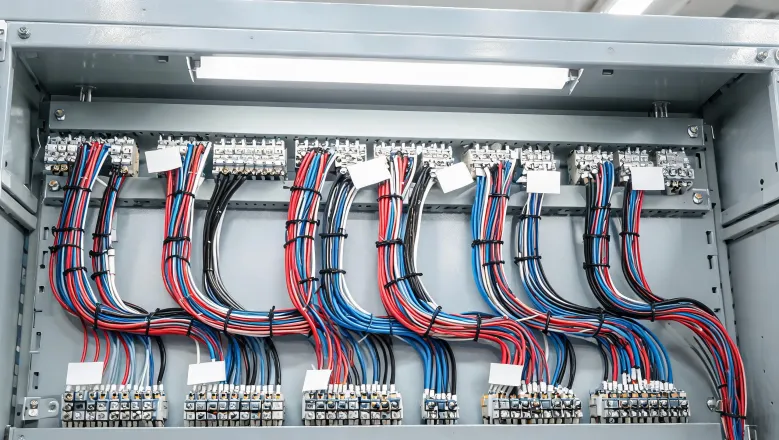
Here's the thing: efficiency isn't a buzzword in B2B sourcing. It's the difference between a clean, repeatable order and a chain of emails about whether a NEMA 12 enclosure actually includes the mounting plate, whether the Panduit cable tie mounts match the hole pattern, and who pays for the rework when the panel doesn't fit.
Argument 1: Unit Price Is a Story; Total Cost Is the Truth
I'm not a compliance engineer, so I can't speak to every interpretation of UL 508A or NEMA 250. What I can tell you from a procurement perspective is that enclosure specifications are full of small variables that vendors interpret differently.
According to NEMA (nema.org), NEMA 250 covers enclosures for electrical equipment and defines types like 1, 12, 4, and 4X. According to UL Solutions (ul.com), UL 508A applies to industrial control panels. That matters because two suppliers can both say 'NEMA 12' and still quote different gasket materials, mounting footprints, and documentation packages.
I assumed 'same NEMA rating' meant identical physical results. Didn't verify. Turned out one supplier's enclosure had a different mounting plate pattern, and our Panduit cable tie mounts didn't line up with the pre-punched holes. We spent about $1,200 on rework and expedited hardware for an order that was supposed to save $600. That's a 200% swing hidden in a spec sheet.
Efficient sourcing fixes this by standardizing the RFQ. You don't just ask for an electrical cabinet; you ask for the enclosure type, the mounting plate drawing, the IP rating per IEC 60529, the cable entry layout, and the Panduit cable tie and mount specifications in the same document. That's not bureaucracy. That's how you stop paying for assumptions.
Argument 2: One-Stop Enclosure and Cable Tie Sourcing Cuts Hidden Labor
Look, I used to think splitting components across specialists was the efficient move. Buy enclosures from one factory, Panduit cable ties from a distributor, mounts from another. More competition, right? In reality, it created a paperwork tax.
Every supplier needed its own PO, its own compliance docs, its own lead-time follow-up. Our team spent hours reconciling packing slips. And when something arrived late, nobody owned the problem because the 'system' was just a spreadsheet and goodwill.
When we moved a standardized line of wholesale enclosures and cable management parts to a single sourcing process, the change wasn't dramatic. It was just quieter. Turnaround on quotes went from five days to two. Data entry errors dropped because one PO covered the cabinet, the Panduit cable tie variety pack, and the adhesive mounts. The production team stopped hunting for missing hardware.
Panduit's published product data (panduit.com) organizes cable ties by tensile strength, material, and environmental rating, and cable tie mounts by mounting method and bundle diameter. I'm not a Panduit engineer, but I can read a catalog. That structure is a ready-made checklist. If your enclosure sourcing process doesn't copy that level of specificity into the RFQ, you're inviting the wrong part.
Argument 3: More Vendors Can Mean More Risk, Not Less
This is the counterintuitive part. Procurement teams often assume more vendors equal more resilience. Sometimes it's the opposite. Every additional supplier adds a communication layer, a quality variance, and a handoff where information can fall through.
I'm not 100% sure this applies to every category, but in our mid-volume enclosure orders, it did. We tracked about 200 orders over three years. The orders with three or more suppliers for a single cabinet build had roughly twice the administrative touch time as the orders with one integrated supplier. The unit prices were sometimes 4-7% lower. The total cost was not.
The efficient approach isn't single-sourcing blindly. It's single-process sourcing. You can still qualify backup vendors. You can still negotiate. But you standardize the spec, consolidate the BOM, and use a scorecard that includes lead time, documentation accuracy, and rework rate. That's how efficiency becomes competitiveness: fewer surprises, faster turns, and a lower cost to execute.
The Pushback: 'This Sounds Like You're Just Avoiding Cheaper Suppliers'
Fair. If your only constraint is a one-off custom panel and you have engineering time to burn, the traditional multi-vendor scramble can work. My experience is based on about 200 mid-range wholesale enclosure and cable management orders. If you're building highly custom, low-volume control houses, your experience might differ significantly.
But most B2B buyers aren't in that category. They're sourcing repeat electrical cabinets, junction boxes, and Panduit cable tie mounts for distribution or OEM production. In that world, efficiency isn't a luxury. It's the product. A supplier that can quote fast, document accurately, and ship a complete kit is worth more than a supplier that shaves 3% off the unit price and then disappears when the mounting holes don't match.
The 'local is always faster' thinking comes from an era before modern logistics and digital spec sheets. Today, a well-organized remote enclosure manufacturer can beat a disorganized local one because the bottleneck isn't distance—it's process.
How to Choose an Electrical Cabinet for Wholesale Without Buying the Wrong Kind of Cheap
If you take nothing else from this, take the checklist. Not because checklists are exciting, but because they keep money in your budget.
- Specify the enclosure and the cable management together. Include NEMA type, UL 508A considerations if applicable, IP rating, mounting plate drawing, and Panduit cable tie or mount requirements in the same RFQ.
- Ask for documentation before the PO, not after. Certificates, test reports, and material declarations should be part of the quote package.
- Score total cost, not unit price. Add rework, expedited freight, admin time, and line downtime. The cheapest quote rarely stays cheapest.
- Check OEM/private label capability if you're a distributor. Your brand is on the line if the enclosure or cable tie mounts fail.
- Test the process with a small order. A supplier that is efficient on a 10-unit order is more likely to be efficient on a 100-unit order.
Pricing and lead times vary by specification, volume, and date. I'm working with January 2025 assumptions here; verify current quotes and compliance requirements with your suppliers and certification experts.
My View, Restated
The most efficient enclosure sourcing process wins—not because it's trendy, but because it reduces the number of ways an order can go wrong. If you're buying electrical cabinets for wholesale, OEM, or distribution, and you're still treating Panduit cable ties and mounts as an afterthought, you're not buying cheap. You're buying risk with a lower sticker price.
Get the spec right. Consolidate the process. Measure the total cost. Then negotiate hard. That's how a procurement manager stays under budget and still sleeps at night.