Buying "equivalent" parts instead of the branded original has cost me roughly $6,200 over eight years. Not in one dramatic failure — in a dozen small ones that each looked like a $40 savings at the time.
I handle electrical and automotive supply orders for a mid-size facilities maintenance operation. Eight years, about 1,400 purchase orders. The mistakes below are mine, not hypotheticals. I'm writing them down so my team never repeats them — and so you don't have to.
Why My "Equivalent" Strategy Failed
Every sourcing guide says the same thing: get three quotes, compare specs, buy the best value. That's what I did. I built a spreadsheet with columns for price, lead time, and "spec match." The problem is that "spec match" is a judgment call. And I judged wrong, repeatedly.
Everything I'd read about sourcing said generic equivalents perform the same as branded originals if the specs line up. In practice, three of the four categories below proved otherwise — not because the generics were defective, but because the spec sheets left out something I didn't know to ask about.
The Leviton Smart Switch Problem
In March 2022, I found a source selling Leviton Decora smart switches at 30% below our normal distributor. Same model number. Same packaging. I ordered 20 units for a commercial retrofit, including a dozen Decora motion sensor switches for the hallway and restroom circuits.
Two of the smart switches wouldn't connect to the hub after the first firmware update. I called Leviton support. The serial numbers came back as units sold through a non-authorized channel. No warranty support. No firmware update path.
The price difference per switch was about $16. The 20-switch order saved us $320. Replacing the two dead units at retail, plus the electrician's return trip, cost us $480. And the client noticed.
That last part matters more than the money. When a client asks why the "smart" switch in their conference room doesn't respond, "we saved 30% on the hardware" is not an answer they want to hear. Quality perception is real. A dead switch on a client site is a dead switch on your reputation.
I still buy Leviton. Just not from the cheapest source. The authorized distributor price runs about 8% higher than the gray-market price — and that 8% buys me a warranty channel and firmware support. That's a no-brainer.
If you're following Leviton smart switch news, you already know their firmware now requires a registered serial number for updates. That's exactly the kind of thing gray-market buyers don't find out until it's too late.
The E3.22 Spark Plug Cross Reference Trap
If you've ever pulled up a spark plug cross-reference table, you know the feeling: three or four "equivalent" options, each claiming to match the original. I picked the one with the best price.
That was 2019. We were servicing our delivery fleet — 14 vehicles. The original spec called for E3.22. The cross-reference said three other plugs were direct replacements.
I assumed "direct replacement" meant identical heat range and electrode design. Didn't verify. Turned out two of the three had a different heat range — one step hotter. On a fleet that runs stop-and-go routes, one step hotter means pre-ignition risk under load.
We caught it at the first scheduled service, not on the road. That was luck. The cost was $890 in re-work plus a one-week delay in the maintenance schedule. Not catastrophic. But I've since created a rule: never trust a cross-reference table without checking heat range and electrode material against the manufacturer's spec sheet.
Here's what I do now, every time: I call the parts counter and ask them to read the heat range off the box. If it doesn't match, I don't buy. No exceptions. That five-minute call has saved me from at least three repeat mistakes.
The Contactors That Wouldn't Energize
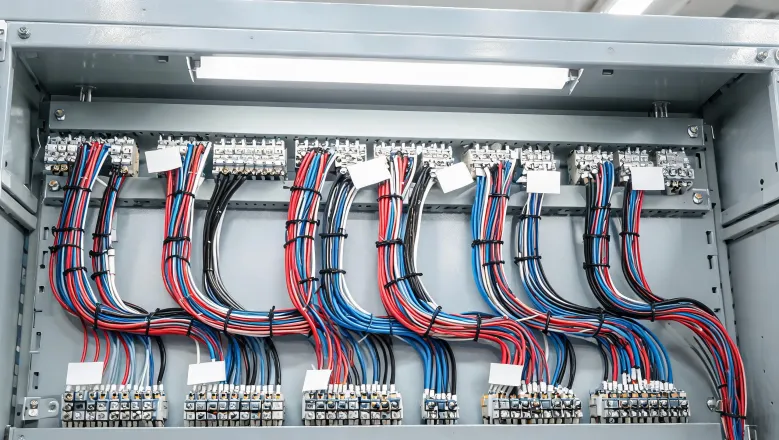
This one still stings. We were building a control panel for a conveyor retrofit. I ordered four 3-pole 30-amp contactors with 120-volt coils. The spec sheet matched our load requirements perfectly.
What I missed: our PLC output was 24 volts. The contactor coils needed 120 volts to energize.
I went back and forth between returning them and buying interposing relays. Returning meant a two-week lead time. Interposing relays meant re-wiring the panel and explaining to the client why their control cabinet had four extra components. I chose the relays. It worked, but it cost an extra $280 in parts and a full day of electrician time.
In hindsight, I should have double-checked the control voltage before ordering. But with the project deadline two weeks out and the panel builder waiting, I made the call with incomplete information. That's the thing about time pressure — it doesn't just rush your decisions. It makes you skip the checks you'd normally run.
The Spark Plug Gap Assumption
Similar story, smaller scale. I once installed a set of pre-gapped spark plugs straight out of the box. Assumed the factory gap was correct for our application.
One plug was off by 0.012". That's not much — until it's enough to cause a misfire under load. We caught it after a rough idle complaint from a driver.
Now I check every plug with a gap gauge before install. If you're wondering how to adjust spark plug gap on a pre-gapped plug, it's simpler than it sounds: measure first, then tap the electrode gently against a hard surface to close the gap, or use a gap tool to open it. Takes about 90 seconds for a four-cylinder. (Mental note: I should have been doing this since year one.)
When "Equivalent" Is Actually Fine
I don't want to overcorrect here. Not every generic part is a trap. Here's my working rule:
Generic is fine when the failure mode is obvious and cheap. A standard toggle switch, a basic receptacle, a light fixture — if it fails, you know within an hour and replacement is a $10 line item. Branded originals matter less.
Generic is risky when the failure is hidden or the stakes are high. Firmware-controlled devices (like smart switches), load-critical components (contactors, breakers), and anything where a "compatible" label hides a spec difference that only shows up under load — those are the categories where I now buy branded or skip the order entirely.
One more caveat: none of this matters if you're buying from an authorized distributor. The whole problem is the gray market. If the price is too good to be true, the warranty probably is too.
The Checklist I Use Now
Before any order over $500, my team runs these five checks:
- Is the seller authorized for this brand? (Check the manufacturer's distributor locator.)
- Does the spec sheet list the exact voltage, heat range, or control signal — not just "compatible"?
- For electrical components, does the control voltage match the panel output? (This one is non-negotiable.)
- For spark plugs, what's the factory gap and heat range? Verify before install.
- What's the failure mode? If it fails silently or fails under load, buy branded.
Five checks. Roughly 20 minutes per order. We've caught 11 potential issues in the past 18 months using this list. That's not a perfect track record, but it's better than the $6,200 I spent learning it.