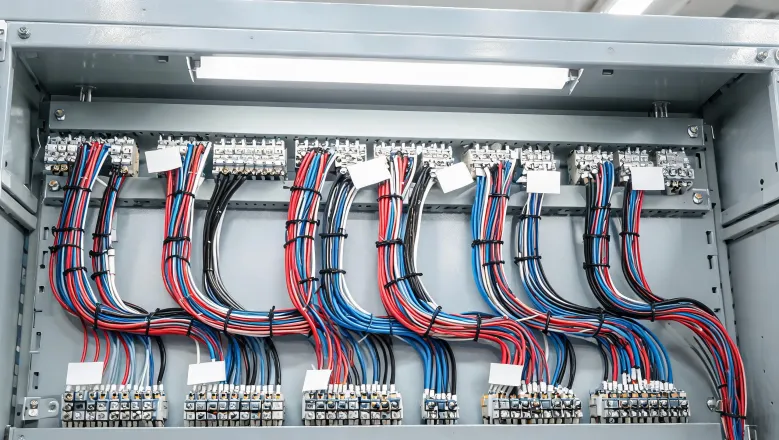
Here's the thing: there's no single right way to buy electrical cabinets and cable ties. The best approach depends on how much time you have, what you're putting inside the box, and how much risk you can absorb.
I coordinate procurement for an electrical equipment company. In the last three years, I've processed more than 200 rush orders—some with same-day turnarounds, some where the "rush" was really just poor planning on someone's part. What all of them taught me is that the buying process splits into three scenarios, and each one needs a different set of questions.
- Scenario A: You have 3–6 weeks. The enclosure is stock or lightly modified. You have time to verify things properly.
- Scenario B: You have 1–2 weeks. The cabinet needs cutouts, mounting plates, or other modifications.
- Scenario C: You have 72 hours or less. Standard advice stops applying.
Why does this matter? Because the box manufacturer that's perfect for Scenario A might be useless in Scenario C. Evaluating them the same way in every situation will lead you to the wrong vendor.
Scenario A: You have lead time—use it to verify, not to procrastinate
This is the easiest scenario, and honestly, it's where most buyers make the dumbest mistakes. Just because you have six weeks doesn't mean you can afford to be sloppy. What was best practice in 2020 may not apply in 2025, but the fundamentals of enclosure selection haven't moved much.
Start with the electrical cabinet specifications. I'm not an electrical engineer, so I can't speak to short-circuit current ratings or coordination studies. What I can tell you from a procurement perspective is that three spec items cause most of the downstream pain:
NEMA rating. NEMA 1 for indoor general purpose. NEMA 3R for outdoor with rain protection. NEMA 4 and 4X for washdowns or corrosive environments. NEMA 12 for dusty indoor areas. Getting this wrong on the purchase order means getting it right six months later—at double the cost.
Material gauge. 16-gauge steel is common for smaller enclosures. 14-gauge for larger cabinets and panels. If a manufacturer can't tell you the gauge without checking their system, that's a red flag.
Finish. Powder coat over pre-treated steel is the standard. Ask about the pretreatment process. If the answer is "we just powder coat it," walk away. Corrosion under a cheap finish will kill a panel long before the electronics inside do.
On the cable side, the same discipline applies. If you're specifying Panduit cable tie products, the things that matter are the material (nylon 6.6 for most applications), compliance (Panduit ties are tested to UL 62275—if your spec calls for UL-listed ties, don't substitute), and the mounting method.
Mounting is where I see the most avoidable failures. People order the tie but forget the panduit cable tie mounts, or they buy adhesive mounts and expect them to work on a surface that hasn't been cleaned or prepped. They won't. I don't have hard data on industry-wide adhesive mount failure rates, but based on our orders and field callbacks, my sense is that at least a third of adhesive mount failures trace back to surface prep. Screw-mount is the safer choice for permanent installations, full stop. If you ask me, the thirty seconds of extra labor for screw-mount is worth skipping the entire category of adhesive failures.
For evaluating the manufacturer in this scenario: ask for drawings and certification documents on day one. A legitimate box manufacturer has dimensional drawings, test reports, and a compliance file ready. If they can't produce them within two business days, that tells you everything you need to know.
Also worth remembering: per FTC guidelines (ftc.gov), a company's claims about their products have to be substantiated. "NEMA 4X compliant" or "UL 508A listed" aren't decorative website phrases—they're factual claims that come with documentation requirements. Asking to see that documentation is normal. Any manufacturer that reacts badly to the question is either brand new or hiding something.
Scenario B: Modifications and a compressed timeline—communication becomes everything
This is the scenario I deal with most often. The client needs a standard cabinet, but with round knockouts in specific locations. Or a mounting plate drilled to their component layout. Or a gland plate that matches their cable entry plan. And they need it in ten working days.
Here the evaluation criteria shift. In Scenario A, you're checking credentials. In Scenario B, you need to verify whether the manufacturer does their own fab or outsources it. That's the single question that separates the vendors who'll hit your deadline from the ones who'll miss it.
Does the manufacturer have in-house cutting, punching, and welding? If not, they're a reseller with a coating of competence, and every external handoff adds delay and risk. I've watched a five-day delivery slip to eleven days simply because the "manufacturer" had to send the enclosure out for custom punching. Not their fault, exactly. But it was their responsibility.
Communication failures are expensive at this stage. I once told a manufacturer "standard size" for a cabinet modification—and they heard "dimensions on your standard drawing." Problem: our approved drawing had been revised, and the version they referenced wasn't current. We discovered this when the cutout arrived about 28mm off-center. Not ideal, but workable. We redrilled the mounting plate and lost three days plus a $180 rush reorder fee.
The fix is unglamorous: put dimensions in writing, include a marked-up drawing, and get written confirmation of cutout locations. The hour you spend double-checking beats the week you spend waiting for a replacement. Between you and me, I don't care how experienced the manufacturer's salesperson sounds—the drawing is the source of truth. Everything else is discussion.
This is also the stage where you should think about panduit cable tie mounts as a design element, not an afterthought. Once the mounting plate is populated, drilling holes for screw-mounts means removing components. That's painful and expensive. Send the manufacturer your cable tie layout and ask them to add the mount holes to the fabrication drawing. It costs them a few minutes in CAD. It saves you hours on the floor.
To be fair, some manufacturers will say "we'll handle it" without asking for specifics. That's not automatically a bad sign—but get the details confirmed in the fabrication drawing. If they resist, be suspicious.
One more question to ask in this scenario: when the manufacturer quotes "two weeks," are those calendar days or business days? You'd be surprised how often that answer is different from what the buyer assumes.
Scenario C: 72 hours or less—your evaluation criteria collapses to three things
This is my home turf. Last quarter alone, we processed 47 rush orders with 95% on-time delivery. I know what works when the clock is actually running out.
In March 2024, a client called at 11 a.m. needing a modified enclosure for a site inspection the next afternoon. Normal turnaround for that enclosure was ten business days. We found a manufacturer with same-day fabrication, paid $350 in rush fees on top of the $1,200 base cost, and delivered at 7 p.m. the following day. The client's alternative was rescheduling a $50,000 inspection—and paying the penalty clause attached to it.
That worked because the manufacturer was honest about what they could do in eight hours. Not every one is. When the deadline is real, your evaluation criteria collapse to three things:
1. Current inventory. "In stock" on a website means nothing. Ask for invoice-level confirmation that the exact model, in the exact gauge, is in their facility right now. If they have to order material, the timeline has already slipped.
2. In-house fabrication. In Scenario B this was a nice-to-have. In Scenario C it's everything. A manufacturer with in-house cutting, drilling, and welding can convert a stock enclosure into a modified one in hours. A reseller can't.
3. Honesty about limits. This is the counter-intuitive one. In an emergency, the most dangerous vendor is the one who says yes to everything. Ask "what can't you do?" and listen to the answer. A manufacturer who says "we can't do NEMA 4X in 48 hours, but we can do NEMA 12" is more valuable than one who promises the impossible and hands you a partial solution at the last minute.
"Can you do it in 48 hours?" isn't the right question. The right question is: "what part of it can't you do in 48 hours?"
What can you compromise on in a true emergency? Cosmetic issues—finish scratches, minor burrs, generic logos. What you can't compromise on: the protection rating, the material, and the cable tie spec. A generic tie can look like a Panduit cable tie and perform very differently. I found this out by saving $40 on one order and ending up with embrittled ties in a warm environment, then spending $300 on labor to replace them. The budget choice looked smart until it wasn't.
Same logic applies to mounts. If the spec calls for screw-mount panduit cable tie mounts, don't accept "we'll use a stronger adhesive" as a substitution. It might survive the bench test. It may not survive the heat cycles. I can't point you to a specific study on this, and I'm not an applications engineer—but I've seen the pattern enough times to treat it as a red flag when a vendor pushes the substitution.
How to figure out which scenario you're in
Here's a practical exercise. Ask yourself two questions, and be honest about the answers.
Question 1: How many actual days are between today and the date when the cabinet has to be installed? Not shipped. Installed.
Question 2: If the enclosure arrives damaged or incorrect, can you fix it on-site? If the answer is no—because it's going into a panel that's already wired, or a wall that's already framed—your timeline just gained a buffer requirement.
If you have 21+ days and the box is standard, you're in Scenario A. Follow the verification-focused approach.
If you have 7–21 days and modifications are required, you're in Scenario B. Communication discipline matters more than any other factor.
If you have under 7 days, or if a single delay triggers a significant penalty, you're in Scenario C. Stop evaluating manufacturers the way you would in Scenario A. Start asking about inventory, in-house fabrication, and honest limits.
And recognize that the industry has quietly changed. Five years ago, a modified electrical cabinet in under three weeks was rare. Today, any decent manufacturer with in-house fabrication can do it. As of the start of 2025, better cutting equipment, better bending technology, and digital drawings have transformed the execution. But some things haven't changed: someone still has to read the drawing, cut the metal, and weld the seams without mistakes.
That's why, after 200+ rush orders, the evaluation criteria I rely on most isn't a 47-point vendor scorecard. It's a simple gut question: does this manufacturer understand their own limits?
The one that answers honestly is the one you can trust with your deadline. Whether you're buying boxes, ties, or both.