The Quote That Looked Too Good
In September 2024, I had three quotes spread across our conference room table and a decision that was taking way longer than it should have. We needed roughly 180 electrical enclosures and junction boxes for a panel-building client, plus the cable management to go with them. I've managed our component sourcing budget—about $2.1 million annually—for seven years, negotiated with 60-plus vendors, and logged every order in our cost tracking system. This should have been routine.
It wasn't. Because one of the quotes came in around 22% lower than the other two, and I couldn't figure out why.
Here's the thing about bids that come in low in industrial supply: they're rarely generous. Somebody is either eating margin to win the account, or something got left out of the number. I've been burned by the second one enough times to be suspicious. So I started pulling the thread.
Three Vendors, Two Very Different Approaches
For context, the project was a spec-heavy job. The client needed enclosures rated for washdown areas, which meant paying attention to NEMA Type 4X and IP ratings rather than just grabbing whatever was on the shelf. According to NEMA 250, Type 4X enclosures are designed to resist corrosion and provide a watertight, dust-tight seal—relevant here because the end environment is a food-processing floor.
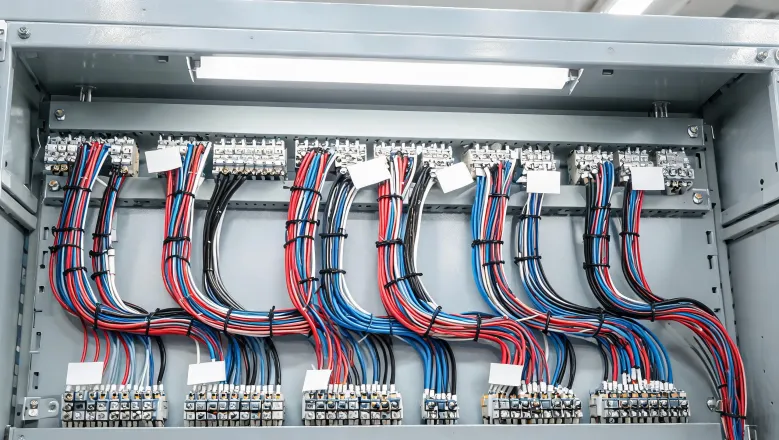
We also needed cable ties and mounts to bundle and route the internal wiring. The client's engineering team had specified Panduit cable ties—their standard, not ours. Not negotiable. Fair enough.
Here's what the three options looked like:
- Vendor A – Established enclosure manufacturer. Solid reputation. Quoted $58,400 for the enclosure line alone, cable ties sourced separately.
- Vendor B – Regional distributor with existing relationship. Quoted $59,100 for enclosures, and quoted Panduit cable ties and mounts at roughly market rate on top.
- Vendor C – Newer supplier pitching a one-stop package: private-label enclosures plus bundled Panduit cable ties and installation tools, all in a single quote.
Vendor C's number was $45,600.
Yeah. That got my attention.
The Numbers on Paper
I put everything into our TCO spreadsheet—the one I built after getting burned on hidden fees twice back in 2022. On the enclosure line alone, Vendor C was $12,800 cheaper than Vendor A. That's not a rounding error. That's the kind of number that gets you a small bonus and a nice note in your review.
But I've learned to slow down at exactly this moment. Because when I asked Vendor C for a fully itemized breakdown—a request I now make mandatory for anything over $10,000—the picture changed.
The Part I Almost Missed
The private-label enclosure option came with a one-time setup charge: $3,400 for the branding plate and label design work. Fine, that's usually amortized if you're running volume. But we were buying 180 units. Spread across one order, that setup charge added about $19 per enclosure. On a repeat order of 500 units, it'd be closer to $7. On a one-and-done project, it's near the full amount.
It wasn't disclosed up front. It showed up in the terms section.
Here's the part that actually irritated me, though. The bundled Panduit cable ties were priced about 28% above what I was getting them for elsewhere. Same product, same part numbers. The one-stop "convenience factor" was quietly subsidizing the enclosure discount.
I went back and forth between Vendor A and Vendor C for two weeks over this. On paper, the private-label path still saved money even after the setup charge. But my gut kept hesitating—not about the numbers, about what happens if something goes wrong. If a NEMA 4X rating turns out to be off, who do I call? An established manufacturer with documentation or a private-label supplier whose actual manufacturing source isn't fully clear?
I'm not a compliance engineer—I can't speak to the deeper technical differences between enclosure ratings or how they're tested. That gets into UL 508A and IEC 60529 territory, which isn't my expertise. I'd recommend getting someone from engineering or a third-party inspector involved for that piece. What I can tell you is the procurement angle: whoever you buy from needs to hand you the certification paperwork without you having to chase it.
So I asked all three vendors for it. Vendor A sent it same day. Vendor B took a week. Vendor C—I'm still waiting on a full packet.
That told me more than the price difference did.
What I Actually Ended Up Paying For
We went with Vendor B. Not the cheapest, not the brand-name star, but the one that combined a reasonable private-label option with a real relationship and immediate compliance documentation.
Final breakdown, real numbers:
- Enclosures (private label, 180 units + setup): $52,900
- Panduit cable ties, mounts, and tools: $6,200
- Freight and expedited partial shipment: $1,450
- Total: $60,550
Compare that to Vendor C's original "low" quote of $45,600 on enclosures, and once you added their cable tie markup and the setup charge, they were actually within about $1,800 of Vendor A's all-in price. The savings evaporated. Not a disaster, but not the steal it looked like on the first page either.
I approved the final PO on a Friday afternoon and immediately thought, did I push hard enough on Vendor C? What if their cable tie pricing had room to move and I just didn't ask? I didn't fully relax until the first partial shipment arrived on time and the enclosures passed the client's incoming inspection. That took three weeks.
The Lesson I Keep Coming Back To
Look, I'm not saying private-label enclosures are a trap. They're not. Half our catalog is private label at this point, and the savings are real when the volume justifies it. What I'm saying is this:
Low sticker price is not the same thing as low total cost, and one-stop sourcing is not automatically cheaper than unbundling.
Three things I now check every single time, because of this project:
- Setup and tooling fees. Ask before the quote, not after. If a vendor won't itemize these, that's your answer.
- Bundled pricing on accessories. Cable ties, mounts, wire duct—these are where "convenience" gets priced in. Get them quoted separately even if you buy them together. For reference, UL 62275 is the standard governing cable ties for electrical installations, so make sure whatever you're buying is actually compliant, not just labeled as such.
- Documentation response time. If a vendor can't produce NEMA 250 or UL compliance paperwork within a business day, they don't have it organized. That's a red flag for everything else they'll be slow on.
One thing I still don't fully understand: why some private-label suppliers can move fast on documentation and others can't, even when both are clearly sourcing from the same tier of manufacturers. My best guess is that it comes down to whether they treat compliance as a core operational function or as an afterthought they outsource. If someone has a better read on that, I'd genuinely like to hear it.
When One-Stop Sourcing Isn't the Answer
I want to be honest about the limits here, because I see a lot of content pushing the "bundle everything" idea without caveats.
A one-stop supplier that pairs private-label enclosures with Panduit cable ties and installation tools is a genuinely good fit if you're running repeat orders, need spec-matched components, and want a single point of contact for compliance questions. That's most of what we do.
But if you're a distributor with an existing Panduit channel you trust, or you're dealing with highly specialized enclosure requirements where the engineering tolerances are tight, a single-source bundle might actually cost you more in flexibility than it saves in paperwork. There's no best option here—there's just the option that fits the specific order, and sometimes the boring choice of keeping vendors separate is the right one.
So. The $58,000 quote turned into a $60,550 order. Not a hero story. But it did what a good procurement decision is supposed to do—it kept the client's spec intact, it kept us out of a compliance mess, and it taught me to ask about setup fees before I fall in love with a number.
Prices in this article are from our 2024 order records and will vary by volume, spec, and market. Verify current pricing and compliance requirements directly with your vendors.