January 12, 2024, 4:47 PM
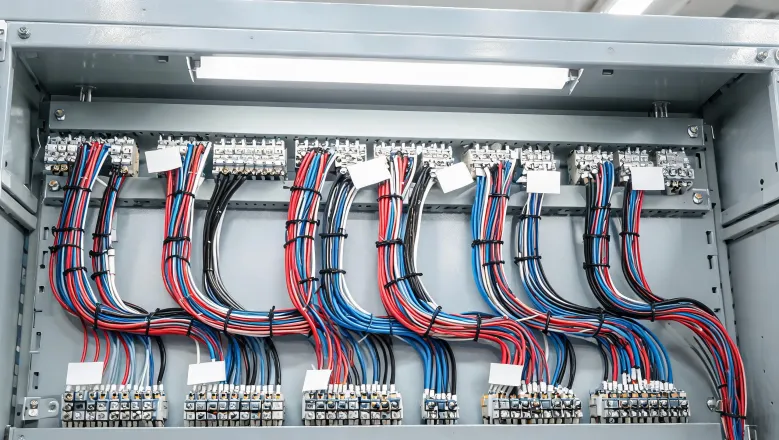
My QC inspector sent me a photo. A panel-mounted electrical cabinet, door visibly off-kilter — about 3mm at the lower right corner. The latch wouldn't engage.
Not catastrophic. But by our spec, it was a reject.
We had 350 of these cabinets on our floor, destined for a food processing plant in the Midwest. Contract delivery: January 26.
And our electrical cabinet manufacturer — a six-year partner with a shop in northern Mexico — had just put us in a hole.
I manage quality and brand compliance for a mid-size B2B distributor. My job is straightforward: every cabinet, every Panduit cable tie mount, every bulk box of components gets reviewed before it reaches a customer. In 2024, I rejected 23% of first deliveries. Powder coat pinholes. Gauge thickness below spec. Hinge misalignment. A Panduit cable tie mount hole off by a millimeter on one panel.
That last one happened on January 12.
The Problem Wasn't Just the Door
The first unit could've been a fluke. We pulled 50 more. Eleven had the same issue — the door frame was slightly warped, forcing the latch.
"Maybe it's workable?" our production manager said.
No. It wasn't.
These cabinets were going into a washdown environment. A misaligned door means the seal doesn't seat. A bad seal means moisture ingress. Moisture ingress means their maintenance team calls us every quarter for the next five years.
Here's the thing most buyers miss: they focus on per-unit pricing and completely overlook the cost of a failure. Rework. Downtime. Expedited freight. The trust you lose with your customer.
So we had a choice: let our existing vendor rework the batch over three weeks, or find a new electrical cabinet manufacturer who could rush 350 units in 10 days.
The rush fee was $3,400.
We paid it.
What to Actually Look for When Evaluating Enclosure Manufacturers
I spent the next 72 hours on the phone like a half-crazed person. I was looking for a shop that could do rush cabinets and — this is the hard part — do them to spec.
The problem: everyone says yes.
But "we can do it" is different from "we've done it." When you're evaluating enclosure manufacturers, most buyers ask about capacity and price. The question they should ask is: "Show me three previous jobs with specs like mine."
Because spec matching isn't just dimensions. It's:
- Powder coat adhesion — cheap shops fail 48-hour salt spray tests (ASTM B117) more often than you'd think
- Mounting hole locations — the door latch holes must align with your panel design within 0.5mm
- Cable entry — punched holes positioned for Panduit cable tie routing and Panduit cable tie mounts
That last one trips people up. If you're specifying Panduit cable ties and Panduit cable tie mounts for wire management, the cabinet cutouts need to match the mount footprint exactly. Off by 1–2mm, and the Panduit cable tie mount either won't clip in or cracks on insertion.
We learned this the hard way.
Back in 2023, we bought a batch of "Panduit-compatible" mounts from a supplier. Their product had two differences: the adhesive backing degraded above 40°C, and the tie slot was loose enough that a 1-inch cable moved around. We installed them anyway.
Nine months later: 11 machines down for loose wiring inside the cabinet. That cost us roughly $8,700 in field repairs, plus the rework, plus the customer trust.
"Don't tell me it's 'Panduit compatible.' Either buy Panduit or spec the mount's retention force into the contract."
That's from my 2023 quality audit report. Now I repeat it every time I evaluate a new supplier.
The 72-Hour Search
I called seven shops. Three said they could do it. Two couldn't provide batch inspection records. One had a minimum order quantity that didn't fit our timeline. The last one — a 40-person operation in Indiana — sent me a spec sheet for Panduit cable tie mounts they'd used in a previous food plant job, along with their cutout dimensions and a sample video of a door alignment check.
They weren't the cheapest. The rush fee was $3,400, about an 18% premium over standard turnaround. They promised 10 days, delivered in 12 — but they sent video at day 8 showing every cabinet checked against our spec sheet.
The batch arrived on January 24. We inspected every unit. Four needed minor adjustments. The rest passed first time.
We paid $3,400 extra. If we'd waited for the original vendor to rework, we would have missed the delivery window and owed roughly $14,000 in late penalties, not to mention what our customer would have faced with their own production schedule.
It's not complex math.
How I Evaluate Electrical Cabinet Manufacturers Now
I now run three questions that I ask every potential electrical cabinet manufacturer, whether they're two time zones away or fourteen:
- "How do you ensure cable management holes match the Panduit cable tie mount footprint?"
- "Can you provide certified Panduit cable tie specs for bulk orders?"
- "How do you sample-test each production batch before it ships?"
Most suppliers get quiet. The few who pull out documentation — batch records, inspection reports, video from the floor — those are the ones who don't end up costing you more later.
What I Took Away
Let me be direct: I'm not saying cheap is always bad. I'm saying when you're under deadline and the stakes are high, the premium you pay for certainty is usually cheaper than the alternative.
We paid $3,400 extra. But we didn't buy "faster." We bought:
- A guaranteed delivery date
- A commitment to our QC standards
- Video proof at day 8
I've seen buyers haggle over pennies and end up with a batch that fails incoming inspection. I've seen them choose the lowest quote and pay for it twice in rework. The math on "saving money" gets real complicated when you factor in the cost of a missed deadline.
That said, I can only speak to our situation. We're a mid-size B2B operation with predictable order patterns and long-term contracts with OEM clients. If you're dealing with seasonal spikes, or you're sourcing something like a bulk box of generic components where specs are loose, the calculus might be different.
But in our world — where you're sourcing electrical enclosures, junction boxes, electrical cabinets, and maybe a few Panduit cable ties or Panduit cable tie mounts to go with them — this is how I think about it. I'd rather explain a $3,400 rush fee to finance than explain a $14,000 penalty and a lost client to the executive team.
The lesson: uncertain cheap costs more than expensive certain. Every time.