If you're buying electrical enclosures and junction boxes wholesale, your real benchmark shouldn't be the unit price on the quote—it should be the total installed cost—including Panduit cable tie mounts, gland plates, fasteners, and labor. Based on tracking roughly $310,000 in annual electrical enclosure and cable management spending over seven years, I'd say most procurement teams can cut 12–18% by building a TCO model before they compare quotes.
In box wholesale, the quote is only the starting point. Put another way: the lowest price on the page is rarely the lowest cost once spec changes, freight, and installation labor enter the picture.
Why this comes from a purchase ledger
I'm the procurement manager at a 140-person electrical equipment manufacturer. I've owned our enclosure and cable management budget for seven years, negotiated with more than 20 vendors, and logged every order—including every painful change order—in our ERP. I didn't start with a TCO spreadsheet. I built one after getting burned twice by hidden fees and rework.
What was best practice in 2020 doesn't necessarily apply in 2025. The fundamentals haven't changed: protecting the equipment and wiring inside the box still matters. But the execution has transformed. Quoting portals, standardized spec sheets, and one-stop sourcing options make it easier to compare apples to apples. The problem is that most buyers don't know what an 'apple' looks like—they compare the box and forget the cable tie mounts until installation.
In Q2 2024, after comparing eight vendors over three months using our TCO spreadsheet, we switched a major enclosure supplier. The switch saved us $8,400—or rather, $8,172 once the annual volume rebate was applied—and almost all of it came from fewer expedite fees. That number is small in percentage terms, but it's a recurring saving, not a one-time discount.
What actually drives electrical cabinet wholesale cost
When I audited our 2023 spending, I found that 32% of our 'budget overruns' came from exactly two places: expedite fees and rework caused by incomplete box specifications. The box itself wasn't the problem. The problem was accessories, mounting, and the gap between what we ordered and what the factory needed to build.
Let me give you a concrete example. In Q4 2024, we compared two quotes for 50 wall-mount enclosures. Vendor A quoted $118 per box. Vendor B quoted $106 per box. On paper, Vendor B saved us $600. But Vendor B didn't include the gland plate configuration we specified, and their lead time required a 15% expedite fee. After adding gland plates and freight, Vendor B ended up about 7% more expensive than Vendor A. The 'cheap' option resulted in a $1,120 redo when the first batch didn't meet spec.
Here's the counterintuitive part: rush orders aren't expensive because the work is harder. They're expensive because they're unpredictable and disrupt the vendor's planned workflow. You're paying for risk absorption and rescheduling, not extra effort. If you need a box in two weeks, the question isn't 'can they do it?'—it's 'what has to be pushed aside?'
What most people don't realize is that 'standard lead time' on an enclosure quote often includes buffer time that vendors use to manage production scheduling. It isn't necessarily how long your order will take. And if you need it sooner, that's where the expedite fee appears.
Box specifications: the boring list that saves real money
Before asking for a wholesale quote, settle the box specifications first. Otherwise you're comparing numbers that don't mean anything. As of January 2025, the core standards I'd check are UL 508A for industrial control panels, NEMA type ratings for enclosure protection, and, where relevant, IP ingress ratings. The NEMA type determines where the box can go—indoor, outdoor, washdown, hazardous location—and it has a much bigger impact on price than the physical dimensions alone.
For a basic wall-mount box, you'll usually choose from NEMA 1, NEMA 3R, NEMA 4, or NEMA 12. A NEMA 4X stainless steel enclosure can cost 40–60% more than a NEMA 1 of the same size, based on the 15 quotes I compared in Q4 2024. That markup isn't a hidden fee; it's the cost of material, gasketing, and ratings. The mistake is upgrading or downgrading the spec because of a price delta without checking where the box is actually installed.
That might sound kinda obvious, but I've watched experienced engineers choose a box based on price and forget the mount spacing. The specs are not a formality. They're the contract between you and whoever has to mount that enclosure and make the wiring look like something an inspector won't question.
Why Panduit cable tie mounts belong in the same order
If you're buying Panduit Cable Tie products through an electrical cabinet wholesale supplier, ask to see the full system—ties, mounts, and accessories—not just the tie itself. The tie does the clamping; the mount does the holding. If you get one without the other, you won't know until installation.
Here's a mistake I made more than once. We ordered enclosures from one vendor and cable ties from another, then discovered that the Panduit cable tie mounts weren't sized for the panel, or the mount adhesive wasn't rated for the operating temperature. The third time that happened, I finally created a standard accessory checklist. Should have done it after the first time.
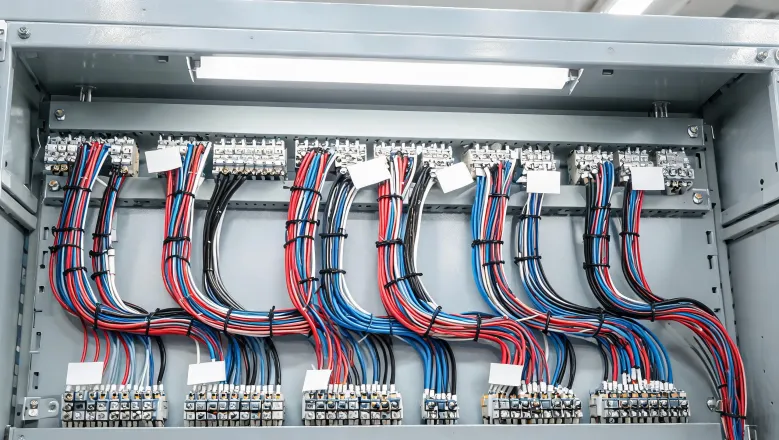
Panduit cable tie mounts are a small line item in the budget, but they're a huge line item in labor. If you're buying junction boxes wholesale and you don't include the mounts in the same PO, someone will make a second trip, open a second package, or redo a mounting pattern. Counting that labor and downtime, ordering mounts later can add 8–10% to your true cost.
Here's something vendors won't tell you: the first quote is almost never the final price for ongoing relationships. Once you've proven you're a reliable buyer, there's usually room to negotiate freight, volume rebates, and line-item pricing on accessories like Panduit cable tie mounts.
How to compare quotes without getting fooled
Here's the process that finally cut our overruns:
- Write the box specifications down before asking for quotes. Include NEMA type, material, gauge, gland plate or knockout pattern, latch style, finish, and certification requirement.
- Add a mandatory line for cable management: Panduit cable tie mounts, cable ties, and mounting rails. This is where hidden differences show up.
- Ask every vendor for a landed cost quote: product, packaging, freight, and estimated lead time with a date. Oh, and freight counts. A quote can look competitive until you see the freight line.
- Multiply the lead time by your installation schedule. If a quote 'saves' $600 but adds three weeks, that delay has a cost.
I also built a simple cost calculator after getting burned on hidden fees twice. The calculator doesn't care about the list price. It cares about the all-in number. Put another way: the cheapest quote is only the cheapest if the box specs match, the lead time works, and the Panduit cable tie mounts are the right ones.
When this approach won't work
This TCO-first method works well for repetitive wholesale purchases—electrical cabinets, junction boxes, cable ties, and accessories you'll order more than once. It doesn't work as well for a one-off, highly custom enclosure where you have to accept a development quote and iterate with the manufacturer. In that case, paying more for engineering input is often justified.
It also doesn't apply if your company has a strict approved-vendor list that doesn't include a direct wholesale supplier. You can still use the same logic, but your 'vendor A' might be the authorized distributor and your 'vendor B' might be the OEM. Don't exclude either one because of labels.
One more boundary: if you're buying an intrinsically safe or hazardous-location enclosure, certification beats cost. Using a non-certified box to save money is not a procurement decision; it's a legal and safety risk. I don't comment on specific brands, but I will say this: never let a cost model override a required certification.
If you take one thing from this, make it the TCO worksheet, not the headline price. The numbers on the quote are the beginning of the conversation, not the final answer.