-
Step 1: Write down the environment before you request a box wholesale quote
-
Step 2: Confirm material, finish, and corrosion protection
-
Step 3: Verify mounting dimensions, not just the overall size
-
Step 4: Specify cable routing and Panduit Cable Tie mounts before production
-
Step 5: Get compliance requirements in writing
-
Step 6: Define packaging and palletizing before delivery
-
Step 7: Put every spec in the PO, not just the email chain
-
Final notes and mistakes I still watch for
Look, I'm not going to start with a definition of an electrical enclosure. If you're reading this, you're probably buying them already. This is the checklist I use for electrical cabinet OEM orders, box wholesale quotes, and any project that includes cable management. It exists because of my own mistakes, not a textbook.
I've been handling B2B enclosure and cable management orders for about 6 years. I've personally made and documented 8 significant mistakes, totaling roughly $18,600 in wasted budget. Now I maintain our team's pre-order checklist so the new folks don't repeat them.
There are 7 steps. Do them in order. Most of the expensive surprises happen because someone skipped a step, not because the supplier was dishonest.
Step 1: Write down the environment before you request a box wholesale quote
Start with dimensions and you'll miss the bigger picture. In 2019, I requested a quote for 20x16x8 enclosures. Price was great. Then I found out the customer was installing them outdoors in Florida, facing direct sun and salt air. That's a terrible time to realize you need a higher enclosure rating.
Document the basics:
- Indoor or outdoor
- Moisture, dust, washdown, or chemical exposure
- Temperature range
- UV exposure
- Vibration or mechanical impact risk
If you don't know the rating, don't guess. Ask the supplier for their box specification guide or a NEMA/IP chart. That's not a weakness; it's how you avoid a $3,800 mistake like mine.
Checkpoint: environment is written down and the enclosure rating is selected.
Step 2: Confirm material, finish, and corrosion protection
The same enclosure shape can be made from steel, stainless 304, stainless 316, aluminum, fiberglass, or polycarbonate. The price difference is significant. The lead time difference is bigger.
I once ordered 47 polycarbonate enclosures because the price looked great. The application needed 316 stainless for chemical washdown. The supplier didn't catch it, and I didn't either until the panel shop called. That was a $4,100 redo. Honestly, it could have been worse.
Finish matters too. Powder coat over cold-rolled steel is fine for a lot of indoor gear. It's not equal to stainless in a washdown area. Don't assume "metal enclosure" is specific enough.
Checkpoint: material and finish match the operating environment.
Step 3: Verify mounting dimensions, not just the overall size
This one sounds too basic to need a step. It isn't.
On a 60-piece order, every enclosure had the wrong backplate hole spacing because I used an old drawing from a previous project. I knew I should verify the panel drawing, but I thought, "What are the odds the hole pattern changed?" Well, the odds caught up with me. Width and height were the same. The mounting hole pattern wasn't. That cost $2,100 and delayed delivery by two weeks.
Ask these questions before you send the PO:
- Is a backplate or mounting panel included?
- What are the exact hole positions on that panel?
- What are the knockout sizes and locations?
- Are there gland plates, studs, or grounding bars?
For electrical cabinet OEM work, confirm with the person who actually assembles the panel. Don't rely only on the customer's RFQ.
Checkpoint: mounting panel drawing is current and matches the enclosure model.
Step 4: Specify cable routing and Panduit Cable Tie mounts before production
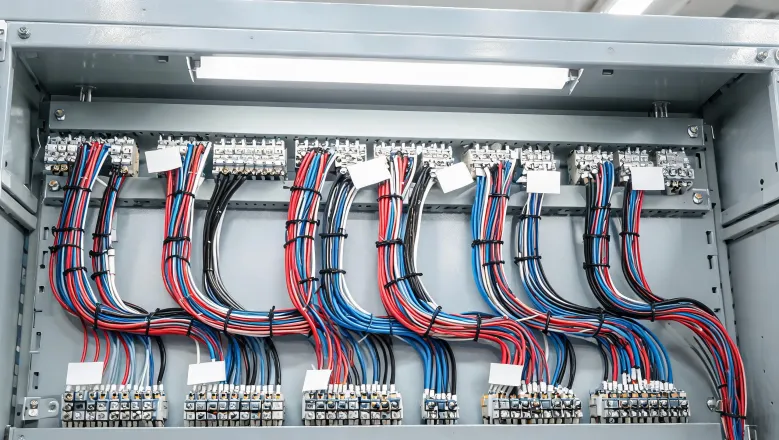
This is the step most box wholesale buyers ignore. The enclosure is not just a box. The inside has to be wired, and wiring needs cable management.
If you're using Panduit Cable Tie mounts, you need to choose the style before the build, not after. There are push-mount, screw-mount, and adhesive-mount versions, and they aren't interchangeable in every situation.
Adhesive-mount Panduit Cable Tie mounts are easy to install, but they need a clean flat surface. In a hot, vibrating cabinet, they can loosen over time. Screw-mount versions take more labor but hold better in tougher conditions. Push-mount types need the right hole size and panel thickness.
According to Panduit's published technical data, each cable tie series has specific mounting hole dimensions and tensile ratings. If a supplier can't pull up the datasheet when you ask, that's a red flag.
A customer once asked me to "just add cable tie mounts" during production. By then, the mounting panels were already punched. We either had to drill holes in the field or switch to adhesive mounts that weren't ideal for the application. The customer wasn't happy, and the extra labor came out of our margin.
Keep a small sample board of Panduit Cable Tie mounts if you buy enclosures regularly. It's saved me more than once. If you're not sure which mount style to use, order samples and test them before the full order.
Checkpoint: cable tie type, mount style, and mount locations are on the panel drawing.
Step 5: Get compliance requirements in writing
This gets into certification territory, which isn't my expertise. I'm not a certifying engineer, so I can't walk you through UL 508A, CE, or every NEMA detail. What I can tell you from a procurement perspective is this: compliance doesn't happen by accident.
Why does this matter? Because a supplier saying "we build to UL standards" is not the same as "this enclosure model is listed." I learned that difference the expensive way.
Write the compliance requirement into the RFQ and the PO. If the enclosure goes into a machine exported overseas, ask about the Declaration of Conformity, not just a marking on the nameplate. Ask to see the actual document.
Checkpoint: compliance requirement is named, and the supplier has confirmed the model can support it.
Step 6: Define packaging and palletizing before delivery
I don't have hard data on how many enclosures arrive damaged industry-wide. Based on our orders, my sense is about 5% of first shipments have some cosmetic issue. Most are minor. One wasn't.
We ordered 14 enclosures as part of a larger electrical cabinet OEM shipment. Every single door had a dented corner because we didn't specify individual packaging, and the freight consolidator stacked heavier material on top. $900 in rework plus a week of delay.
If you're buying in box wholesale quantities, tell the supplier exactly what you need:
- Individual cartons or foam corner protectors
- No metal straps directly against painted surfaces
- Pallet weight limits and stacking rules
- Moisture barrier for overseas shipments
It feels like unnecessary detail. Then one dented door makes it feel essential.
Checkpoint: packaging requirements are written into the PO or supplier confirmation.
Step 7: Put every spec in the PO, not just the email chain
Here's where my gut and the data disagreed. The spreadsheet said the supplier included gland plates. The email thread also seemed to say that. But something felt off. I checked the PO confirmation. No gland plates anywhere.
The supplier's sales rep had confirmed pricing on the phone, but the internal order notes didn't include the gland plates. Nobody caught it until the enclosures arrived without them. That mistake cost us a 3-day production delay and a very awkward call with the customer.
The checklist isn't complete until the written confirmation includes every item:
- Enclosure model, size, material, and finish
- Compliance markings
- Panel or backplate details
- Panduit cable ties and mounts, if included
- Packaging and palletizing
If it's not in the confirmation, assume it doesn't exist.
Checkpoint: supplier confirmation matches the full spec.
Final notes and mistakes I still watch for
A few things that don't fit neatly into steps:
- Depth gets skipped more than any other dimension. Everyone asks width and height. Depth is where clearance issues appear.
- OEM doesn't mean "no spec." For electrical cabinet OEM work, drawings need version control. I've been burned by an old revision more than once.
- Cable management is not an afterthought. Even if you're not using Panduit cable tie mounts, the mounting panel needs to accommodate wire routing, bundles, and service loops.
One more thing: if a supplier asks questions about the application after you send the RFQ, that's a good sign. It means they're actually reading the spec. The worst orders I've placed were the ones where nobody asked a single question.