-
When This Checklist Helps
-
Step 1: Write the Enclosure Specification Before You Contact a Supplier
-
Step 2: Verify the Compliance Story Early
-
Step 3: Treat Panduit Cable Ties as a Real Line Item
-
Step 4: Decide Whether You're Buying Bulk Enclosures or OEM Enclosures—and Ask the Right Questions Either Way
-
Step 5: Put the Delivery Date in Writing
-
Common Mistakes I Still See
-
When This Checklist Isn't Enough
When a wholesale enclosure order needs to move fast, the first question I ask myself is simple: how bad is the damage if this goes wrong? Most orders I coordinate—junction boxes, wall-mount enclosures, electrical cabinets, and the Panduit cable ties that ship alongside them—arrive with a date attached. Sometimes it is a commissioning schedule. Sometimes it is a booked container. Sometimes it is a customer who already promised their own customer a completion date.
I don't write the engineering specification. I'm the person who takes those specs and makes sure the order actually lands on time. Over the past few years, I've handled well over two hundred rush enclosure orders. And I can tell you what actually causes delays. It's rarely a factory that can't keep up. It's almost always a spec that wasn't locked down early enough, or a small component that was treated as an afterthought.
When This Checklist Helps
Use this when you're choosing boxes for wholesale orders—meaning you're buying enough volume, or enough customization, that a mistake can't be fixed by a quick trip to the local supply house.
- You need bulk enclosures—junction boxes, electrical cabinets, or similar—at quantities of 50 units or more, depending on your own operation.
- You're placing an OEM enclosure order, which means you're integrating the enclosure into your product and need custom holes, colors, labels, or packaging.
- Your order includes cable management items such as Panduit cable ties or panduit cable tie mounts, whether as separate line items or bundled by the same supplier.
- The timeline is short enough that ordering again isn't a realistic fallback.
If you need three boxes for a maintenance job that has to be done this week, this checklist is overkill. Buy from a distributor with stock and move on. And if your project involves classified hazardous areas, explosion-proof requirements, or arc-resistant switchgear, involve an engineer rather than relying on a procurement article.
Step 1: Write the Enclosure Specification Before You Contact a Supplier
It took me four years and more than one late-night phone call to fully absorb this lesson: when a buyer says 'we need some boxes,' that sentence can mean a hundred different products. Two buyers can ask for the same thing using entirely different names, and two suppliers can quote the same name with completely different boxes.
Before you pick up the phone, write one paragraph that a stranger could quote against. Cover these points at minimum:
- Material and finish: mild steel with powder coat, stainless 304 or 316, polycarbonate, or fiberglass
- Environmental rating: NEMA 1, 3R, 4, 4X, or 12—and whether you truly need a rated product or just want a rugged enclosure
- Dimensions, including depth
- Mounting style: wall mount, free-standing, or pole mount
- Cutouts: knockouts, gland plate positions, or custom openings
If you're ordering OEM enclosures, keep the customization details in a separate paragraph: paint color code, silkscreen or logo placement, nameplate requirements, and packaging instructions. Don't mix them into the dimensional spec or they will get missed.
Most of the 'how to choose box for wholesale' advice you'll find online focuses on unit price. In my experience, unit price is rarely what sinks a rush order. A wrong spec sinks it faster. Poor communication sinks it faster still.
Checkpoint: could a stranger send you an accurate quotation based on what you've written? If not, you're not ready to contact suppliers.
One more thing I've noticed: buyers sometimes worry that locking the spec down slows them down. It doesn't. What slows an order down is a factory calling mid-production to ask whether 'dark gray' means RAL 7035 or RAL 7042—and then waiting two days for an answer.
Step 2: Verify the Compliance Story Early
I'll say this plainly: 'UL equivalent' is not a listing. It's a phrase that usually means the product isn't listed. Some enclosure applications never require a listing, and that's completely fine. But if an electrical inspector or your customer's specification calls for listed equipment, a well-intentioned equivalent won't get you through the review.
For background, NEMA enclosure type ratings are described in NEMA Standards Publication 250 (nema.org). In the US, the product standards most commonly referenced for enclosures are UL 50 and UL 50E. If you need to verify whether a manufacturer's enclosure is listed, ask for the UL file number and look it up in the UL Product iQ database at ul.com. It takes a few minutes and it removes the guesswork.
The OEM side has one more wrinkle. If you plan to private-label an enclosure, the listing mark doesn't automatically transfer to your brand. There are authorized approaches for labeling, but they depend on an agreement between you and the manufacturer. I'm not the certification expert on our team, so don't hold me to the details of every option—but I do know from experience: ask how the UL mark will appear on your enclosure OEM product before you confirm the order, not after.
Step 3: Treat Panduit Cable Ties as a Real Line Item
Cable ties are the smallest thing on most enclosure orders. They also cause an outsized share of the timeline problems.
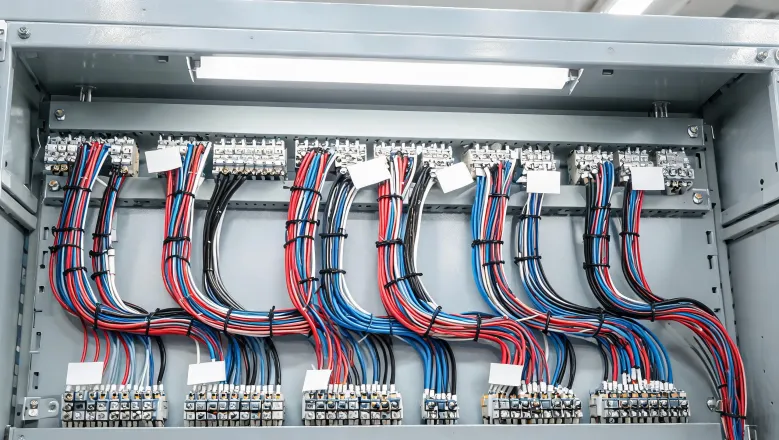
Here's the pattern I see: a buyer negotiates enclosure pricing for two weeks, confirms production slots, then sends a follow-up email—'oh, and we need cable ties too.' Nobody checks whether the ties are in stock at the same facility. Nobody asks whether they'll ship together. If the enclosures arrive and the cable ties don't, you're not building anything.
The fix is to put cable management into the specification from the start. If your project calls for a specific Panduit cable tie, write it down by catalog number, not by 'white zip ties.' Panduit publishes complete technical data on its website, covering material, length, tensile strength, flammability rating, and temperature range. Cross-check the number against your application before you order.
And if you need panduit cable tie mounts, specify the mounting type: adhesive-backed, screw-mount, or standoff. Adhesive-backed mounts in particular depend on the enclosure surface finish. If your enclosure has a textured powder coat, the adhesive performance may not match the datasheet. That's a design question, not a purchasing question, but someone needs to raise it before the order is placed.
If a supplier offers to substitute a different brand, that can be a perfectly valid move. All I ask is that the decision happens with your customer's approval, not silently on the supplier side. I've seen low-cost substitutes work fine. I've also seen a shipment rejected because the spec called out a specific manufacturer and the box showed up with something else.
Checkpoint: every component on the order—enclosures, cable ties, mounts, accessories—has a manufacturer and a catalog number.
Step 4: Decide Whether You're Buying Bulk Enclosures or OEM Enclosures—and Ask the Right Questions Either Way
Buyers often use these terms interchangeably. They're different processes.
A bulk enclosure order is volume purchasing of a standard product. You're not changing the design; you're buying a hundred copies of the same box at wholesale pricing. The right questions there are about stock levels, replenishment cycles, consistent quality, and committed delivery dates.
An OEM enclosure order is different. The enclosure becomes part of your product, which means customization is on the table: paint, cutouts, captive hardware, back panels, gland plates, labels, and packaging that matches your workflow. The questions change completely.
- Which customizations happen before finishing, and which happen after? A hole cut through a powder-coated surface can expose bare metal and affect corrosion resistance.
- What is the minimum quantity for a custom version, and what setup or tooling charges apply?
- Will the customization affect the compliance listing? This is where the Step 2 conversation becomes essential.
Conventional wisdom says to get three quotes for every significant purchase. I used to believe that. After years of expediting orders, I've come to the opposite conclusion: when the timeline is tight, the value of an established supplier relationship beats chasing a marginal price difference. What I mean is that a supplier who already knows your spec, your paperwork, and your deadlines can quote in hours. A new supplier needs weeks to learn those things—time you may not have.
That doesn't mean you should never compare suppliers. It means the lowest quote isn't the cheapest if the supplier misses the date. A fast response matters, but it only matters when that response is built on an accurate understanding of your needs.
Step 5: Put the Delivery Date in Writing
This is the step that separates a routine purchase from an expedited one.
Tell the supplier what your required delivery date is. Not 'soon.' A real date.
I understand the instinct to hide the deadline so the supplier doesn't think they have leverage. In my experience, that backfires. If the production lead time is three weeks and you need the order in two, the supplier needs that information to warn you. Maybe they have a partially finished run they can piggyback on. Maybe they can ship the in-stock portion while custom units finish. Maybe the date simply isn't feasible, and you need to know that before you promise your own customer anything.
Earlier this year, a buyer asked us for 80 enclosures with a hard installation date eight days out. Normal lead time on that product was closer to three weeks. Because the buyer shared the date up front, we found a path: 60 units from a run already in progress, and the remaining 20 expedited through the finishing line. It wasn't cheap, and it wasn't comfortable, but it worked. If that buyer had said only 'as soon as possible,' we probably would have quoted standard lead time, and everyone would have discovered the problem too late.
Ask the supplier to confirm the delivery date in the purchase order or quotation. If they can't commit to writing, that's an answer too—just not the one you want.
Common Mistakes I Still See
- Running a full bidding process inside a two-week window. In an emergency, you don't need a bidding process. You need a qualified supplier who can confirm fast and deliver faster.
- Hiding the real deadline. It might feel like negotiation leverage. In practice, it prevents the supplier from offering solutions until it's too late.
- Adding accessories at the last minute. A $60 box of Panduit cable ties can stop a panel build just as effectively as a missing enclosure. Put them on the original request.
- Trusting 'equivalent' claims without checking. Whether it's an enclosure listing or a cable tie brand substitution, the time to challenge it is before the PO, not after inspection.
When This Checklist Isn't Enough
I want to be honest about the limits here. If you need a custom stainless enclosure in 48 hours, that probably isn't feasible—and if a supplier promises it without asking any questions, be suspicious. Realistic expectations are part of the job.
This guide also isn't for hazardous location enclosures, explosion-proof fittings, or projects with special seismic or arc-flash requirements. Those need engineering review, not a procurement shortcut.
I haven't quoted prices in this article, and that's deliberate. Enclosure pricing varies too much by material, dimensions, and finish for a generic range to be useful. The fastest way to get a realistic budget is to send the one-paragraph spec from Step 1 to two or three suppliers and compare line items. Prices change, so verify current rates before you commit.
If you take one thing from this checklist, let it be this: the expensive mistake in bulk enclosure buying is rarely paying too much for the box. It's paying twice because the first order missed the date, didn't meet the listing, or didn't match the spec. Sort those out before you order, and the timeline has a much better chance of taking care of itself.