-
You're probably asking the wrong deadline question
-
The surface problem is a fast quote. The deeper problem is what went quiet.
-
'Enclosure OEM vs private label' is not the same argument everyone thinks it is
-
Panduit cable tie mounts are the hidden test
- The real cost is not the holes. It is the sequence.
-
What I would do before ordering enclosures again
You're probably asking the wrong deadline question
If you've ever ordered an electrical enclosure two weeks before a machine has to ship, you know the feeling. Not the calm, professional 'we can handle this' feeling. The other one. The one that hits when a supplier asks if you need a standard cabinet or a modified cabinet, and your schedule has no room for the word 'modified.'
I coordinate rush enclosure and wire-management orders at a B2B electrical equipment manufacturer. In the last three years, I've handled a few hundred cabinet orders, including same-day turnarounds for OEM customers who were facing penalty clauses. Here's what I know: the calls that wake me up at 3 a.m. are rarely about a missing box. They're about a missing specification.
The box was almost always the easy part.
The surface problem is a fast quote. The deeper problem is what went quiet.
When a project slips, most buyers do the same thing. They open an electrical cabinet catalog and start comparing dimensions, steel gauge, color, door style, and maybe a NEMA rating. They ask an enclosure manufacturer for pricing. If the quote comes back fast and clean, it feels like progress.
Then somebody asks about the inside of the cabinet.
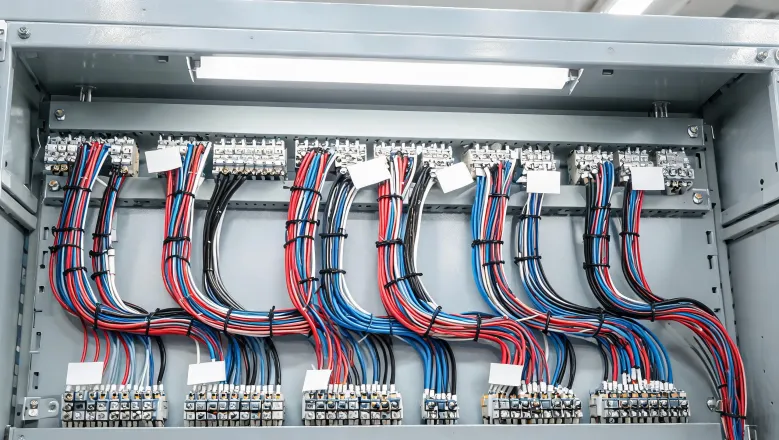
Where do the Panduit cable tie mounts go? Is the back panel punched? Are the holes pre-threaded? Does the layout match your harness routing? Can an installer secure a screw-mount Panduit cable tie mount without drilling through paint on the project site? If no one asked those questions before giving you a price, that quote is not a real price. It is the beginning of a negotiation disguised as a quote.
I've learned to ask 'what's NOT included' before I ask 'what's the price.' That question alone filters out a surprising number of suppliers. If you ask it and get a vague answer, treat it as a red flag. To be fair, some vendors are not hiding anything. They just quote from catalogs quickly. But a transparent quote with clear exclusions is worth more than a round number with no questions behind it.
'Enclosure OEM vs private label' is not the same argument everyone thinks it is
The phrase 'enclosure OEM vs private label' causes a lot of confusion, and I get why. Across different suppliers, those words mean different things.
From my perspective, private label usually means this: a manufacturer takes a standard product from its electrical cabinet catalog and puts your name on it, changes the color, maybe changes the door hardware. That works when the standard box itself satisfies your application and you only need branding.
An engineered OEM enclosure is different. A supplier starts with a base design or a blank drawing and builds the cabinet around the application. The supplier owns or supports modifications that affect cable entry, panel layout, mounting hole patterns, and documentation. This is the model that matters when your equipment has cable bundles, internal subpanels, and a deadline.
Neither model is wrong. But if you ask for an OEM cabinet because you need custom mounting provisions, and the supplier hears 'private label our standard box,' the result arrives on time and still misses the whole point. The drawing does not show the parts of the cabinet you actually care about.
In my opinion, the deeper issue is not choosing one label over the other. It is making sure the supplier has responsibility for the inside of the enclosure. If the inside is not in their scope, someone else will be responsible, and that someone is usually your installation crew.
Panduit cable tie mounts are the hidden test
This is the part that sounds kind of small until it ruins a week: Panduit cable tie and Panduit cable tie mounts. They are inexpensive components. But they tell you immediately whether an enclosure manufacturer is thinking about the product as a system or as a metal box.
If you write 'furnish and install Panduit cable tie mounts' on a BOM, a careful supplier should ask: which mounts? What spacing? Will they go on the back panel or an interior subpanel? Are they adhesive-back or screw mounts? If screw mounts, does the steel need pre-drilled holes? What size thread? How many cable bundles will they support? That level of detail is not over-engineering. It is the difference between a useful drawing and a decorative one.
I once said 'Panduit cable tie mounts on the back panel' and the factory heard 'ship a bag of Panduit cable tie mounts and let the installer figure it out.' We discovered the mismatch when the first cabinet reached the wiring bench. The panel was clean. There were no holes. The installer had to stop, call engineering, and wait for a decision. Later, drilling holes in finished cabinets led to a change order, another production slot, and an overtime delivery.
Here's what you need to know: if it isn't on the drawing, it doesn't exist. A thought in your head is not a specification. A model number in the catalog is not a wiring-ready interior.
The real cost is not the holes. It is the sequence.
The price difference between a cabinet with no interior preparation and one with proper Panduit cable tie mount provisions is usually small in the BOM. The expensive part is discovering the difference after the PO has been placed.
When an enclosure reaches the field without the required mounting prep, the next steps are usually expensive: stop, discuss, re-engineer, re-manufacture, wait, ship again, re-install. Those costs rarely show up in the original quote. The base price may look like the cheapest choice from the electrical cabinet catalog, but it was never the same scope as the engineered version.
A rush order from March 2024 stays with me because it illustrates the point perfectly. A customer needed 24 wall-mount cabinets for packaging-line retrofits. They selected a standard model from a catalog and sent out the PO quickly. The internal cable mounting detail was left off the spec. During production, the harness layout required Panduit cable tie mounts in positions that did not exist on the bare panels. We caught it before shipment, but only after a change order, extra engineering time, and premium freight. The customer's alternative was worse: an installation crew on site, with every cabinet open, trying to make field modifications without the right hole pattern or tools.
Honestly, I have never fully understood why intelligent design teams let interior cable routing disappear when they send a PO. My best guess is because it feels like a supplier detail, until it isn't. When I'm triaging an order, I think about time, feasibility, and risk, in that order. The price issue is almost never the true driver of a rush situation. The true driver is that somebody discovered a missing interior detail too late.
Broad claims are not a spec
One pattern makes me immediately suspicious: 'this cabinet is fine for any industrial use.' If a supplier cannot name the specific standard behind that statement, be careful. If you modify an enclosure after delivery, ratings such as NEMA or UL may no longer apply unless the modification is part of a listed assembly or evaluated by the relevant safety organization. FTC advertising guidance also says marketing claims should be truthful and substantiated, so if a supplier makes an overbroad claim in writing, ask them to substantiate it. The right answer is a standard number, a test report, or a certificate with clear boundaries.
If you get a vague answer instead, that is another red flag, especially when your customer is expecting compliance documentation.
I should also be transparent about the limits of my experience. Most of what I know comes from B2B electrical enclosure orders, mostly domestic, in the $500-to-$15,000 range. If you're buying commodity enclosures through an overseas import program or building a simple junction box with no internal cable management, parts of this article will not apply. The habit of asking 'what's not included' still applies, but the risk profile is different.
What I would do before ordering enclosures again
I get why buyers start with price. Budgets are real. But a catalog is a starting point, not a contract. Trust me on this one: 'draw the inside first' sounds obvious, but it is the thing that gets skipped more than any other step.
- Draw the inside first. Even a rough back-panel sketch with cable entry zones and dimensions is better than leaving the interior blank. If you already know that Panduit cable tie mounts belong on a panel edge, say so in the quote request.
- Define what kind of supplier you actually need. If you need branding, private label works. If you need engineered mounting details, ask an enclosure manufacturer for an OEM review, not just a stock-item quote.
- Ask for the exclusions list. When you compare quotes from different manufacturers, compare the same missing line items. If one quote excludes interior mounting and the other includes it, the first one is not cheaper.
- Include cable management hardware in the mechanical scope. If Panduit cable ties and Panduit cable tie mounts are part of your design, let the cabinet supplier see that part of the BOM. A supplier who can quote enclosures plus cable management as one package saves you from coordinating two vendors and two blame chains.
Bottom line: don't ask which enclosure is cheapest. Ask which enclosure supplier understands the inside of your product. The right answer might not be the fastest quote, but it will save you from the 3 a.m. phone call I'm usually on the other end of.