The pallet arrived on a Tuesday, and everything looked fine on paper
In January 2024, we took delivery of 200 Omron PLC modules for a packaging line retrofit. The vendor's certs were clean. The datasheet matched our spec. My first instinct — and I'm not proud of this — was to sign off after the standard 10% spot check.
That's how it works in a lot of shops: pull a few units, run them through the test fixture, call it good. On paper, 20 out of 200 is statistically defensible. In practice, it's a sample size that tells you almost nothing about the batch you didn't touch.
We ran the spot check. All 20 passed. I was two signatures away from releasing the pallet to staging when one of our installers, a guy named Dave who'd been doing panel builds for eighteen years, flagged something odd. One of the modules was dropping a relay output intermittently — not enough to fail the fixture, but enough that his Fluke caught a discontinuity he couldn't reproduce on the second pass.
"Probably a fluke in the tester," he said. "But you might want to look at the terminals."
The Fluke wasn't fluking. I pulled ten more units and started checking continuity by hand. Three of them showed resistance spikes across the terminal block that shouldn't have been there — nothing dramatic, just enough drift to make a relay chatter under load. On a packaging line running 40 cycles a minute, that kind of intermittent fault is the difference between a clean shift and a 3 a.m. maintenance call.
The thing about continuity tests is they're suspiciously cheap to run
I want to pause here because this is the part of the story where I usually get a question from junior inspectors: how do you actually test continuity? The short answer is you don't need a lab. You need a $14 multimeter, a known-good reference point, and about ninety seconds per unit.
If you're new to it, the process is straightforward. Set the meter to resistance mode (or continuity mode if yours has the beep function). Touch one probe to each end of the connection you're verifying. A healthy circuit reads near zero ohms — usually under 1 ohm for a good terminal. Anything north of 5 ohms on a connector this size is worth a second look. Anything that fluctuates while you wiggle the wire is a red flag, full stop.
That last part is the detail most people miss. A static resistance reading only tells you the connection exists. It doesn't tell you whether it's stable under vibration, heat cycling, or the kind of mechanical stress a PLC module sees when it's mounted in a panel that gets bumped by a forklift twice a week. If you want to know how to use a multimeter to test continuity in a way that actually predicts field failures, you have to combine the resistance reading with a physical stress test.
Which is what I should have been doing all along, instead of trusting a 10% sample.
The root cause wasn't what I expected
I escalated to the vendor. Their initial response was professional but defensive: the units met the published tolerance, the spec sheet allowed for it, and our test fixture might be out of calibration. I sent them the resistance traces. They went quiet for a day.
Turns out the problem wasn't the module design. It was the reflow oven on their line downstream of the terminal solder joint. Specifically, a micro air filter in the ventilation path had clogged and wasn't replaced on schedule. The contamination that built up in the reflow chamber deposited a thin flux residue on the contact surfaces — invisible to the eye, detectable on a meter, and just conductive enough under humidity to cause the kind of drift Dave's Fluke had caught.
None of this showed up in the spot check because the residue was only building up on units that had passed through the oven during the last four hours of the production run. Our 20-unit sample happened to be drawn from the first shift. The probability that we'd have caught it with a 10% sample was, in hindsight, absurdly low.
I'd like to say I handled the escalation with grace. I didn't. I sent a fairly pointed email about the filter maintenance log, and the vendor — to their credit — didn't push back. They reworked the entire batch, replaced the filter, and added a resistance verification step to their outgoing QC. We ended up about three weeks behind schedule and roughly $22,000 into rework and expedited shipping, but the packaging line went live with a failure rate that's been effectively zero across eighteen months of operation.
Here's the part that still gets me: the root cause wasn't a bad design. It was a $40 consumable that nobody was tracking.
What actually changed in our process
Two things, and neither of them was glamorous.
First, we moved to 100% continuity verification on every PLC module before staging. It adds about four hours of labor per 500-unit shipment. On a project this size, that's nothing — a rounding error against the $22,000 we ate. The cost of a single rework event dwarfs the cost of testing every unit.
Second, I started paying closer attention to the software side of our test setup. We run a small vision system on the test bench to log terminal photos automatically, and it's on a Windows box with an Nvidia card. We were getting intermittent frame drops during logging sessions — annoying, not critical — and one of the younger techs showed me how to fix it through the Nvidia control panel by locking the display's refresh rate and disabling the global VSync override. It's a two-minute fix, and I mention it only because I'd been treating that workstation as a black box for two years. Turns out a lot of "mysterious" test-bench problems are just settings you've never opened.
That's the unglamorous part of quality work. You don't find the problems by being smarter than everyone else. You find them by being more stubborn about the boring steps.
The number that stuck with me
Eight percent. That was the actual defect rate on the batch, according to the vendor's own rework data. Eight percent of 200 units means sixteen modules that would have gone into the field with a latent intermittent fault. On a packaging line running 24/5, a relay that drops out once every few thousand cycles is a phone call at 3 a.m., a line stoppage, and a customer who now associates your name with unreliability.
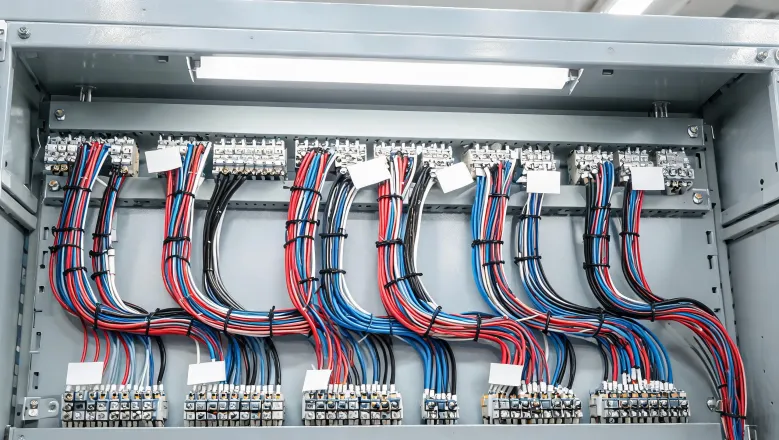
Here's the thing I keep coming back to. The customer who buys that packaging line doesn't know anything about reflow ovens or micro air filters. They don't know what a continuity test is. They see the panel our installers built, and they form a judgment about our company within about ninety seconds of watching it run. The PLC module is a component from Omron. The training our techs had to go through to program it — that's ours. The panel build, the debug, the commissioning — ours. The brand they're evaluating belongs to us, not to the component manufacturer.
That means every spec decision inside the panel is, in a real sense, a brand decision. The quality of a $200 module and the quality of the $40 filter that keeps the reflow oven clean sit on the same ledger, because they both show up in the same customer experience — one as a feature, the other as a failure mode.
If you're specifying components for a customer deliverable, the question isn't "does this meet spec." It's "would I be comfortable if the customer saw the resistance traces for this batch."
What I'd do differently
Looking back, I should have pushed for 100% verification the moment the project spec came in — not because I had data suggesting a problem, but because the cost of verification was so trivial relative to the cost of a rework. I didn't, because I'd internalized the "10% is statistically valid" habit from years of working with high-volume consumer goods, where the failure modes are well-characterized and the manufacturing processes are mature.
Industrial automation isn't that. The batches are smaller, the processes are less standardized, and the consequence of an intermittent fault is dramatically larger. A failed consumer product gets returned. A failed PLC module takes down a production line.
I can only speak to our setup — a mid-size integrator doing custom panels for packaging and material handling customers. If you're running a high-volume original equipment manufacturing line with a mature supplier relationship and a statistically validated sampling plan, a 10% spot check may be perfectly defensible. But if you're a smaller shop sourcing modules through distribution and assembling panels on a project-by-project basis, I'd argue the sample size that makes sense is 100%.
The math is simple. Four hours of verification against $22,000 of rework is a ratio of roughly 1:200. Even if your rework event is ten times cheaper than ours was, the ratio still favors testing every unit.
The takeaway I gave my team
I wrote this on a whiteboard in the test area after the rework was done:
"The customer sees the panel, not the spec sheet. Test like they're watching."
It's a little cheesy. But it's the most useful thing I've learned in four years of doing this work. Quality is not a compliance function. It's the mechanism by which your engineering decisions become the customer's first impression of your company. Every continuity test, every reflow oven filter, every hour of programming training your techs go through — it all lands in the same place: the moment the customer watches your line run for the first time.
You can't control what they think in that moment. But you can control how many of those moments you've tested for before they arrive.
Prices and specifications referenced in this article reflect 2024 project data and should be verified for current procurement. Continuity testing procedures vary by module type — always follow the manufacturer's terminal specifications for acceptable resistance ranges.