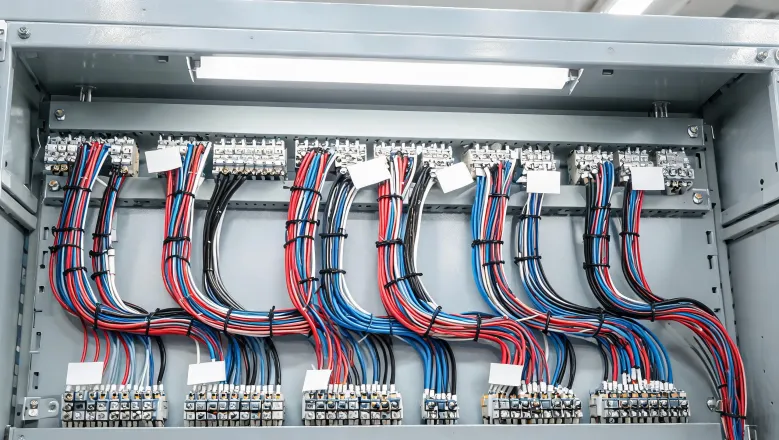
What I'm Actually Comparing Here
I'll be straight with you: most "Siemens vs. the competition" contactor comparisons are written by people who have never had to explain a missed shipment to a plant manager at 6 a.m.
I have. More than once.
I coordinate emergency electrical procurement for an industrial supply house. Last quarter alone, we processed 47 rush orders with a 95% on-time rate. Some were $500 relay swaps. Some were $15,000 panel builds that couldn't slip a day. When I'm triaging a rush order, I care about three things and nothing else: how many hours I have, whether the part can physically get here, and what the worst-case failure looks like.
So this comparison runs on that lens. I'm putting Siemens contactors up against the alternatives most of my clients ask about — primarily Cutler Hammer (Eaton) — across four dimensions: model range, real cost, lead time under pressure, and documentation quality. Then I'll tell you plainly when Siemens is the wrong pick.
Quick housekeeping, because the search intent around this topic is messy. If you landed here wondering what is an electrical relay — a relay is simply an electrically operated switch that opens or closes a circuit using a low-power signal. A contactor is the heavy-duty cousin: same principle, built to switch much larger loads. Everything below assumes you already know that and need to pick a brand, not a definition.
Dimension 1: Model Range and Spec Coverage
On paper, this is where Siemens is genuinely hard to beat. The Sirius line, the older 3TF series, the 3RT series — between them you can spec AC contactors, DC contactors, safety contactors, vacuum contactors, lighting contactors, and definite purpose contactors without leaving one ecosystem. If you know exactly which Siemens definite purpose contactor fits a 40A HVAC disconnect, the catalog is deep enough that you'll find it in one lookup.
Cutler Hammer covers a lot of the same ground, and for some frame sizes their catalog is actually easier to navigate. The honest difference isn't range — it's granularity. Siemens tends to offer more sub-variants within a single frame size (coil voltages, auxiliary contact configurations, terminal styles). That's great when you need an exact fit. It's a headache when you need a contactor and don't yet know which variant is sitting in a distributor's bin.
My verdict on this dimension: Siemens wins on depth, but only if your spec is already locked. If you're still narrowing down, a broader-but-shallower catalog can get you to a working part faster.
Dimension 2: Price — and Why the Cheapest Quote Often Isn't
Nobody wants to talk honestly about Siemens contactor price, so let me try. Price depends on frame size, coil voltage, auxiliary contact count, and which series you're in — a 3RT in a common frame size prices very differently from a specialty safety contactor in low volume. Public list prices and actual distributor sell prices diverge sharply (this has been true as long as I've been doing this; verify current numbers with your distributor as of early 2025, because they move).
Here's the part that surprises people: on a line-by-line quote, Cutler Hammer is frequently cheaper. Not always, but often enough that I've had clients push back on Siemens recommendations for exactly this reason.
And on a normal order, that matters. On a rush order, it usually doesn't. I've watched clients save $40 per unit on a competing contactor and then pay $300 in expedited freight and a week of downtime because the cheap distributor's "in stock" listing was stale. The invoice price is not the cost. The cost is the invoice plus the risk you took to get it.
I assumed for years that the premium-priced option was always the safer rush bet. Didn't verify. Turned out that assumption cost us on a few orders where a cheaper brand was genuinely sitting in a local warehouse while the Siemens part was three states away. Price and availability are not the same question.
Dimension 3: Lead Time Under Deadline Pressure
This is the dimension I actually lose sleep over.
In March 2024, a manufacturing client called at 4 p.m. needing a definite purpose contactor for a compressor line that had to be back online 36 hours later. Normal turnaround on that part was five to seven days. We found a distributor with two units in stock, paid roughly 40% over list in expedited handling, and delivered by 9 a.m. the next morning. Missing that window would have triggered a $12,000 penalty clause and probably lost the account.
The lesson wasn't "Siemens ships fast." The lesson was that brand matters less than confirmed local inventory. A Siemens contactor in a warehouse two hours away beats a Cutler Hammer contactor that has to cross three state lines, every single time.
The same logic applies to cross-referencing, which is where a lot of people get stuck. Whether you're chasing a Siemens contactor cross-reference or a HIPA spark plug cross reference, the process is identical: match the electrical and mechanical spec, not the brand name. Part number, coil voltage, contact rating, mounting. Get those right and you can substitute safely. Get them wrong and the fastest delivery in the world just gets you the wrong part sooner.
Dimension verdict: Cutler Hammer and Siemens are roughly tied on nominal lead time. The winner is whoever has stock. Confirm inventory by phone before you trust a website.
Dimension 4: Documentation and Engineering Support
Siemens wins this one, and it isn't close. Catalogs, data sheets, dimensional drawings, and technical support are consistently thorough. When an engineer needs to verify a coil surge rating at 11 p.m. before a morning install, that documentation depth is worth real money.
But I'll be honest about the limit: good documentation does not solve an emergency. If the part isn't in stock, a beautiful data sheet is just a well-formatted apology. I've seen clients over-rely on brand support and under-invest in confirming availability. That's a mistake I've made myself — the documentation told me the spec, not whether anyone could ship it.
When Siemens Is the Wrong Choice
I recommend Siemens contactors for a lot of situations. But if you're dealing with any of these, look elsewhere first:
- Tight budget, non-critical load. A lighting contactor in a low-stakes application doesn't need premium documentation. Save the money.
- Single-unit, must-ship-today orders. Call local distributors of every major brand before picking a favorite. Availability trumps preference.
- Non-standard coil voltages or legacy replacements where the Siemens catalog variant doesn't match and a cross-referenced Cutler Hammer part fits cleanly.
- Small-volume custom panel builds where a distributor's house brand may offer identical specs at meaningfully lower cost.
That last one is important. I used to push Siemens by default on every panel because it was "the safe choice." After a few years and roughly 150 orders, I came to believe that a safe brand is only safe if it fits the actual constraint in front of you — and sometimes that constraint is budget, not reliability.
How I'd Decide If I Were You
If you're specifying a new panel and need guaranteed documentation, predictable specs, and a deep catalog of variants — go Siemens. Sirius or 3RT, depending on frame size.
If you're in a rush, stop brand-shopping and start inventory-hunting. Call three distributors, confirm stock in hand, and take the fastest confirmed ship date, regardless of the name on the label.
If price is the binding constraint and the load isn't safety-critical, get quotes from Cutler Hammer and Siemens side by side and let the numbers decide. You'll often find Cutler Hammer wins on paper — just make sure "on paper" includes a verified ship date.
There's no universally best contactor. There's only the best contactor that's actually available when your line is down. After nine years of rush orders, that's the only conclusion I trust.