Office administrator for a 280-person company. I manage facilities and MRO ordering—roughly $190,000 annually across 11 vendors. I report to operations and finance.
When I took over facilities purchasing in 2020, I thought enclosure wholesale was simple. Find a box. Find a panduit cable tie. Find a mount. Compare price. Push the PO. Done.
That was the problem I thought I had. Price. Lead time. Maybe a little supplier reliability.
Wrong.
In our 2024 vendor consolidation project, I tried to cut our electrical and MRO vendor list from 14 to 8. The goal was to save admin time and get better pricing. Instead, I learned that electrical enclosure sourcing is not a commodity exercise. And electrical cabinet compliance requirements are not something you fix after the panel is built.
What I Actually Got Wrong About Electrical Enclosure Sourcing
Here's the thing: I was buying parts. I should have been buying a system.
An electrical enclosure is not just a metal box. It is a NEMA-rated environment, a mounting platform, a heat and dust barrier, and a documentation package. The Panduit cable tie mounts inside it are not accessories. They are part of the wire support and routing system. If one piece is wrong, the whole assembly can fail an inspection.
What most people don't realize is that the cheap distributor quote usually assumes you already know every specification. They quote the box. They don't quote the compliance.
People think expensive enclosures are what pass inspections. Actually, documentation and spec discipline are what pass inspections. A perfect Type 12 enclosure with missing UL 508A component paperwork is still a problem. A basic enclosure with clear traceability can pass faster.
Per NEMA 250, enclosure types are defined by environmental conditions. A Type 1 is not a Type 12. A Type 4 is not a Type 4X. If your spec says 'indoor enclosure' and the supplier ships something that looks right, you may not find out until washdown or dust season.
Per IEC 60529, IP ratings are also specific. IP54 and IP66 are not interchangeable. As of January 2025, at least, the rating has to match the installed environment.
Then there are the cable ties. I used to think a panduit cable tie was a panduit cable tie. Not true. Nylon 6/6, UV-resistant black, heat-stabilized, stainless steel, different tensile strengths, different temperature ranges. UL 62275 covers cable ties for electrical installations. Verify current requirements at UL Standards & Engagement. If the tie doesn't have the right recognition and lot traceability, you can lose the whole panel's documentation chain.
Panduit cable tie mounts add another layer. Adhesive-backed mounts, screw mounts, push-mounts, and edge clips all have different pull-force and temperature limits. Put the wrong one on a vibrating machine frame and it will fail. Not might. Will.
Here's something vendors won't tell you: the first quote is almost never the final price for ongoing relationships. There is usually room to negotiate once you prove you're reliable. But the bigger secret is that 'in stock' does not mean 'compatible.' A wholesale enclosure may be in stock and still be wrong for your UL 508A panel build.
I have mixed feelings about brand-name cable ties. On one hand, they cost more. On the other, the traceability, tool compatibility, and consistent dimensions save real time. When you are building 40 panels, a 12-cent difference per tie is noise. A missing material certificate is not.
What It Cost Us When Compliance Was an Afterthought
In 2023, we did a warehouse expansion. We needed about 40 enclosures, plus wire duct, labels, and roughly 1,200 cable ties and mounts.
I found a low-cost enclosure wholesale offer. It saved us about $3,200 upfront compared with our regular supplier. I felt pretty good about it.
Then the inspector asked for component documentation. The enclosures had no NEMA 250 conformance paperwork on file. The cable ties had no UL 62275 recognition details. The mounts had no lot traceability. Our contractor had to replace the ties and several mounts, re-label the panels, and redo part of the wire routing. The rework bill was $8,600. We lost two days of schedule. Operations estimated one hour of downtime at the main site costs about $1,800. Do the math.
That was the expensive part. The embarrassing part was different.
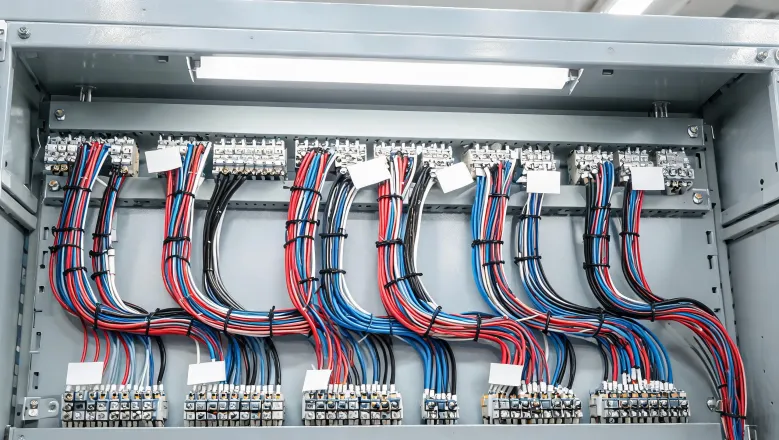
During a client audit, a visitor opened one of our electrical cabinets. The cable routing was neat, but a few mounts had failed. The labels did not match the drawing. He didn't say much. He just asked, 'How do you verify components?'
Quality is brand image. The inside of your electrical cabinet is your company's handwriting. A client sees loose ties or missing labels and makes a judgment about your whole operation. We didn't lose the contract, but we had to submit a corrective action plan. That took three people two weeks to close.
We also had an invoicing failure that same year. A new vendor gave us a handwritten receipt for a $2,400 order. Finance rejected the expense. I ate it out of the department budget. Now I verify invoicing capability before placing any order. No exceptions.
Never expected the biggest issue to be missing material certs on a part that cost pennies. Turns out the cheap part is rarely the cheap part.
The Fix Is Smaller Than You Think
Look, I'm not saying you need to buy the most expensive enclosure or the most expensive cable tie. I'm saying you need to buy the right documentation and the right spec.
The fix is not a new ERP. It is a purchase order template and a receiving checklist.
First, spec by standard, not just brand. Write the standard into the PO: UL 62275 recognized cable ties, UL 508A component documentation, NEMA 250 Type [X], IEC 60529 IP [X], RoHS and REACH declarations. Per EU RoHS Directive 2011/65/EU and REACH EC 1907/2006, restricted substances apply to electrical equipment. Verify current requirements at the European Commission. As of January 2025, at least, those declarations should come before the shipment, not after.
Second, ask five questions before you approve any electrical enclosure sourcing vendor:
- Can you provide lot traceability and material certs for every component?
- Which cable tie standard do you meet—UL 62275, CSA, or both?
- Can you support OEM/private label packaging and labeling without changing the compliance docs?
- What happens if a mount or tie fails in the field?
- Can you invoice properly and provide compliance documents at delivery?
Third, treat Panduit cable tie mounts as engineered parts. Check adhesive type, temperature range, pull force, screw size, and material. If your panel vibrates, use a mechanical mount, not adhesive. Simple.
Fourth, make documents a receiving condition. No certs, no receipt. That one rule would have saved us $8,600.
Fifth, keep a primary and a backup supplier. Redundancy saved us during a 2024 supply chain issue. But audit both. A backup that cannot provide traceability is not a backup. It is a future problem.
NFPA 79 and UL 508A both push wire marking, support, and component documentation. Verify current editions at NFPA and UL Standards & Engagement. The exact clause matters less than the habit: buy the documentation with the part.
Bottom line: you are not buying a cable tie. You are buying audit evidence, uptime, and client trust. The part is cheap. The proof is not. That's it.