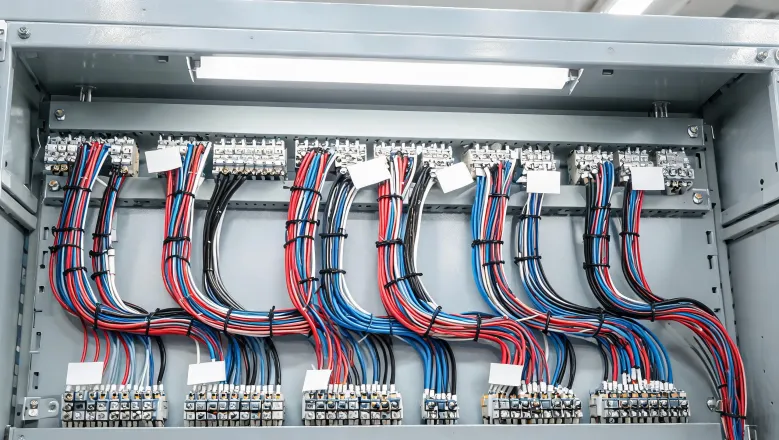
It started with a three-page spec and a word I should have questioned
In February 2024, our facilities manager dropped a three-page spec on my desk. I was the office administrator for a 180-person manufacturing company, and I managed MRO ordering—roughly $260,000 a year across 11 vendors. I processed 60 to 80 orders annually and reported to both operations and finance. The project: a new assembly line needed 14 bulk electrical cabinets, 6,000 Panduit cable ties, 1,200 Panduit cable tie mounts, and two installation tools.
I had bought office chairs and software licenses. I had not bought industrial enclosures. So I did what any admin would do: I built a spreadsheet.
My first mistake was treating the word standard as a universal spec. I asked one enclosure supplier if their cabinets would work with Panduit cable tie mounts. Their sales rep said, Sure, standard. I heard, Yes, compatible. They meant, standard for our cabinet line. We were using the same word but meaning different things. I discovered that when the cabinets arrived and our electricians started mounting cable tie mounts inside.
The spreadsheet said Vendor B. My gut said slow down.
I had three quotes. Vendor A was a local distributor I had used for small orders. Vendor B was an online wholesaler with the lowest unit prices—about 15% lower on the bulk electrical cabinet order and 12% lower on the cable tie and mount line items. Vendor C was a regional enclosure supplier that also carried Panduit cable ties, mounts, and tools. Vendor C was not the cheapest. Vendor C was about 8% higher than Vendor B on the total quote (which, honestly, felt like a lot at the time).
Every spreadsheet analysis pointed to Vendor B. My gut said something was off. B's quotes came fast, but technical answers came slowly. I asked for a cut sheet and got a brochure. I asked about mounting hole patterns and got, It will work. I asked for lead time in writing and got, Usually quick.
I split the order. Cabinets from Vendor B. Panduit cable ties, mounts, and tools from Vendor C. In my opinion, that felt like a balanced decision. I saved money on the big-ticket cabinets and bought the branded cable management parts from a supplier who actually knew the product line. The problem was compatibility. I did not treat the cabinet, mounts, and ties as one system.
What actually went wrong
The cabinets arrived two weeks later than B's sales rep had casually mentioned. Not a disaster—until our electricians opened them. The interior mounting plate had a different hole pattern than what we planned for. The Panduit cable tie mounts we bought were fine. The cabinets were fine. The combination was not. Our team had to drill new mounting holes, clean metal shavings, and redo layout for 14 cabinets. That added 14 hours of overtime at $85/hour (this was back in 2024, and rates may have changed). I also had to pay a $190 freight surcharge that was not in the original quote, plus a $260 expedite fee on a second shipment of mounts because we ran short after the layout changes.
Then finance got involved. Vendor B had not provided the UL file and enclosure rating documentation our engineering team needed for the project binder. Their invoice was correct, but the compliance packet was incomplete. I spent six hours over two weeks chasing paperwork. Finance rejected part of the expense until we got the documentation. I looked bad to my VP because the line startup slipped three days.
The worst part: the unit price savings were real. B was cheaper per cabinet. But the landed cost was not cheaper. Add the surcharge, expedite fee, overtime, restocking fees on a partial return, and my own time, and the cheap quote turned into about $2,100 more than Vendor C's original all-in quote. That does not even count the three-day delay.
I said as soon as possible. They heard whenever convenient. Result: delivery two weeks later than I expected. I should have asked for a written date with a penalty clause, not a vibe. That communication failure cost more than the line-item difference.
Compatibility is not a feeling. It is a drawing, a tolerance, and a document.
What to look for in a electrical enclosure supplier
After that project, I rebuilt our purchasing checklist. If you are buying a bulk electrical cabinet and Panduit cable ties or mounts, the enclosure supplier matters as much as the cable tie brand.
- Compatibility in writing. Ask for the maximum cable tie width, mount screw-hole size, and mounting hole pattern. Panduit's official catalog lists tie dimensions, max bundle diameter, and mount compatibility (accessed January 2025). Do not accept standard as an answer.
- Documentation before payment. For enclosures, NEMA 250 and UL 508A are common reference points in North America; IEC 60529 IP ratings are common elsewhere. Per those standards, ratings depend on the specific product and application. Ask for the cut sheet, UL file number if applicable, and material certifications. Verify with the manufacturer's documentation, not a sales email.
- Lead time in writing. I want a date, not usually. If a supplier cannot commit to a date, that is data.
- A sample or first article. For 1,200 Panduit cable tie mounts, a $30 sample is cheap insurance. Check the mount against the actual cabinet backplate before the full order ships.
- Landed cost quote. Freight, expedite fees, restocking fees, payment terms, and warranty. I now calculate TCO before comparing any vendor quotes.
- Invoicing and compliance. If they cannot provide a proper invoice, W-9, and requested documents, finance will reject the expense. That vendor who could not provide proper invoicing cost us $2,400 in rejected expenses years ago. I never want to repeat that.
The TCO math that changed my process
Here is the simple TCO sheet I use now. It is not perfect, but it stops me from falling for the lowest unit price.
- Unit price × quantity
- Freight and surcharges
- Expedite or rush fees
- Restocking/return fees
- Internal labor: receiving, inspection, rework
- Downtime or delay cost
- Compliance/documentation time
- Warranty and replacement risk
The $500 quote turned into $800 after shipping, setup, and revision fees. The $650 all-inclusive quote was actually cheaper. That is the whole lesson. In my opinion, the enclosure supplier who helps you calculate that number is worth more than the one who only sends a price.
I also started tracking response time. If a supplier normally replies to a technical question in three days before the sale, what happens after the PO is issued? More often than not, slow pre-sale answers preview slow post-sale support. That is not always true, but it has been true enough for me.
What I would tell another admin buyer
If you are sourcing Panduit cable ties, Panduit cable tie mounts, and bulk electrical cabinets, do not shop them as separate line items. Shop them as a system. The cable tie width, mount hole, cabinet backplate, and installation tool all have to work together. A supplier can be great at one piece and still cost you a fortune on the whole order.
Personally, I would rather pay 8 to 12% more up front for a supplier who answers technical questions in writing, provides compliance documents, and commits to a date. That is not always possible on a tight budget. But more often than not, the cheapest quote is cheap because something is missing—and you find out what after the cabinets are on the floor.
I still buy from multiple vendors. I still compare prices. But now I compare total cost of ownership first. And I always, always ask what standard means before I place the order.
If you ask me, the best enclosure supplier is not the one with the lowest number on the first page. It is the one who makes the second page—freight, documentation, compatibility, and lead time—boring and predictable. That is what keeps your electricians working and your finance team off your back.