The Dock Doesn't Care About Your Purchase Order
I'm a quality and brand compliance manager at an electrical equipment distributor. I review every enclosure and cable management shipment before it reaches customers—roughly 200 SKUs a year, plus OEM/private-label runs. In our Q1 2024 quality audit, we found that 11% of first deliveries had some spec or documentation gap. Not catastrophic failures. Just enough mismatch to stop the line, trigger a submittal revision, or make a customer ask why the box looks different from the last one.
Most buyers think the problem is price or lead time. It's not. The problem is that the purchase order says one thing, the catalog says another, and the box that shows up says something in between.
The Surface Problem: Everything Looks Right Until You Measure
A Panduit cable tie order seems simple: length, tensile strength, material, color. Then you get a batch where the nylon feels slightly different, or the stamping is faint. A panduit cable tie mount arrives with an adhesive liner that peels cleanly in the sample but leaves residue on the production run. An enclosure wholesale order ships with the correct dimensions but the wrong powder coat gloss level. A box distributor sends a submittal PDF that lists a NEMA 250 Type 12 rating, but the gasket durometer doesn't match the original approved sample.
None of this shows up in a quote. It shows up at receiving inspection, or worse, at the customer's panel shop.
The Deeper Problem: Specifications Are a Chain, Not a Line Item
Here's what I wish more purchasing teams understood: a part number is not a specification. It's a pointer to a specification. And that pointer can drift.
1. Substitution logic
Enclosure wholesale and box distribution often involve multiple production sites, private-label agreements, and regional stock. A supplier may treat a cross-reference as equivalent because the dimensions match. But equivalence in form doesn't always mean equivalence in certification, gasket material, or mounting hole tolerance. For Panduit cable tie and mount programs, the official Panduit catalog data (tensile strength, material, environmental rating) is the baseline. A distributor's cross-reference sheet is not.
2. Certification language
UL listed is not the same as UL recognized. NEMA 250 Type 12 is not the same as IP66, even when a sales sheet implies overlap. UL 62275 covers cable ties for electrical installations; UL 508A covers industrial control panels; IEC 60529 defines IP ratings. If your electrical cabinet specification guide just says 'UL compliant,' you've left the door open for a document that passes procurement but fails the AHJ.
Per UL 62275 and NEMA 250, ratings and listings are application-specific. Verify current requirements with UL, NEMA, or the local authority having jurisdiction. As of January 2025, Panduit publishes part-number-level tensile and material data in its official catalog—use that source for the baseline.
3. The mounting interface
Panduit cable tie mounts are where a lot of field failures start. Adhesive chemistry, surface energy of the enclosure paint, temperature range, screw hole diameter, and screw head type all interact. A mount that holds on a clean, abraded steel panel may fail on a textured powder coat. That's not a cable tie problem. It's a system problem.
I don't have hard data on industry-wide defect rates, but based on our five years of orders, my sense is that 8–12% of first deliveries have some spec or documentation gap. Honestly, I'm not sure why some box distributors treat certifications as marketing copy instead of controlled documents. My best guess is that sales teams are measured on quote speed, not submittal accuracy.
What It Costs When You Don't Catch It
The most frustrating part of vendor management: the same issues recurring despite clear communication. You'd think written specs and approved first articles would prevent misunderstandings, but interpretation varies wildly. After the third late submittal from the same enclosure wholesale supplier, I was ready to drop them. What finally helped was building a one-page verification protocol into every PO.
A few years ago, we received a batch of 1,200 electrical cabinets where the door gasket was off by about 1.5 mm and the paint color was two shades off from the approved RAL. The vendor claimed it was within industry standard. We rejected the batch. They redid it at their cost, but we still lost two weeks and had to explain the delay to a panel shop that had crews scheduled. That quality issue cost us a $22,000 redo between expedited freight, re-inspection, and overtime. Now every contract includes gasket durometer and RAL requirements.
I went back and forth between accepting a partial shipment and holding the whole PO for a $400 gasket mismatch. On paper, accepting it made sense—the customer needed boxes. But my gut said hold it, because the project was a hospital upgrade and the AHJ wanted submittals that matched the approved spec. We held it. The customer was unhappy for a day. They would have been furious if the inspection failed.
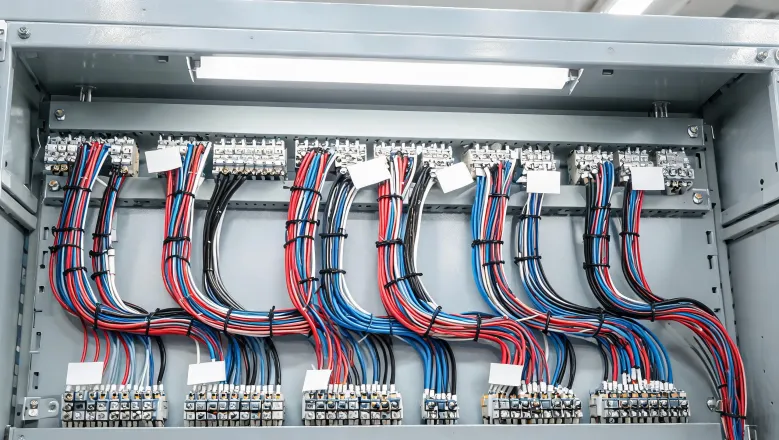
And this is where quality becomes brand perception. Customers don't see your supplier qualification process. They see the enclosure. They see whether the cable tie mounts are aligned, whether the labels are straight, whether the paint matches the sample. When I switched our OEM enclosures from sticker labels to laser-etched labeling, client feedback scores improved by 23% in our next quarterly survey. The cost difference was about $0.80 per unit. On a 5,000-unit run, that's $4,000 for a measurably better first impression. The $50 difference per project translated to noticeably better client retention.
The Fix: A One-Page Electrical Cabinet Specification Guide
You don't need a 40-page manual. You need a controlled one-pager that travels with every RFQ and PO.
- Exact part numbers and revisions. For Panduit cable tie and panduit cable tie mounts, list the full Panduit part number, not a generic size. Include material, color, tensile rating, and mounting method.
- Certification matrix. Separate UL listing, UL recognition, NEMA 250 type, IEC 60529 IP rating, RoHS, and REACH. If a supplier can't provide the certificate for the exact part, don't accept 'equivalent.'
- First-article inspection. Require photos, dimensional report, gasket durometer, powder coat RAL, and a sample mounted on the actual enclosure finish.
- Change control. No substitution without written approval. This applies to enclosure wholesale partners and box distributors alike.
- Receiving checklist. Match PO, packing list, label, and certificate. If any document is missing, quarantine the shipment.
The spec sheet isn't the product. The product is what arrives at the dock, gets installed, and sits in front of your customer for the next ten years. Treat the electrical cabinet specification guide as a quality document, not a sales attachment. That's the difference between buying a Panduit cable tie and actually getting the performance you specified.