Unit Price Is Lying to You About Your Cable Tie and Enclosure Costs
After tracking $180,000 in cumulative electrical component spending across 6 years, I can say the most expensive mistake in our procurement history wasn't a bad vendor. It was optimizing the wrong number.
Unit price is almost never the number that matters. Total cost of ownership is. And if you're buying Panduit cable ties from one supplier and electrical enclosures from another, you're very likely paying a hidden premium you haven't calculated yet.
The spreadsheet I wish I'd built sooner
I didn't see this until Q3 2023, when I was auditing our annual electrical enclosure wholesale spending. We had four suppliers at the time—one for bulk electrical enclosures, one for Panduit cable ties, one for panduit cable tie mounts, and one backup vendor for rush orders. Each invoice looked reasonable in isolation. Together, they were a mess.
So I built a TCO spreadsheet. Broke it down by line item. Administrative overhead alone came to about 6 hours a month reconciling four vendor portals, four return policies, and four delivery schedules. At our loaded labor rate, that's roughly $2,400 a year. No one puts that in a budget, because it's invisible.
Freight consolidation savings we were leaving on the table: roughly 18% per shipment by combining orders. We placed about 140 orders last year. That's another $2,100.
And then there were the small-order fees—one supplier charged $15 per order under a minimum threshold (note to self: why did it take me three years to catch that?). Six years, roughly 80 orders under threshold: about $1,200.
When I showed the CFO, he said, "That's only five grand a year, right?"
I said no. That was the visible part. The rest was in rework, compliance handling, and the two weeks a year I spent untangling invoices instead of negotiating better pricing.
Where the real cost hides: compatibility and rework
Here's the thing nobody tells you in an electrical enclosure wholesale cost guide—enclosures and cable ties aren't independent line items. They meet at the wall.
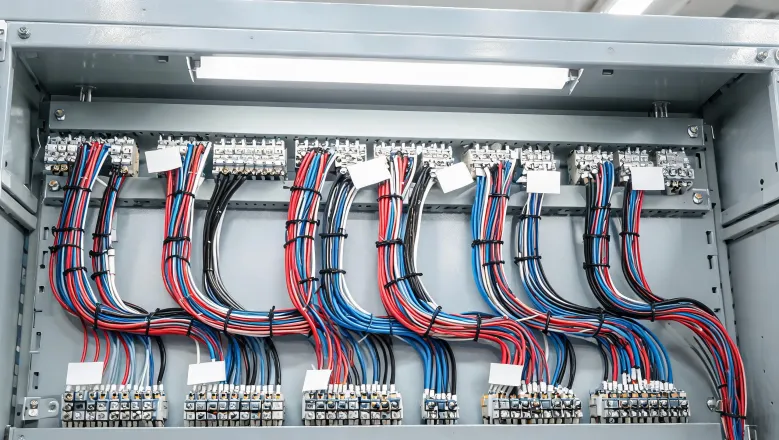
When you're mounting panduit cable tie mounts inside an enclosure, the wall thickness matters. So does the hole spacing. If your enclosure supplier and your cable tie supplier are different companies, nobody owns that fit. You find out at installation.
We found out the hard way in 2022. A batch of enclosures arrived, we ordered third-party tie mounts, and the alignment was off—walls too thick. By the time we discovered it, the panels were already on-site. Rework cost us about $1,800 in labor, plus a two-week delay. That whole episode would've been a non-issue if someone had aligned specs upfront.
One vendor. One spec sheet. No guessing.
I still kick myself for not pushing for that earlier. If I'd centralized our enclosure and cable management sourcing in 2020 instead of 2024, we'd have avoided that entire headache.
The counterintuitive argument: cheaper quotes cost more
In Q2 2023, I got a quote from a cable tie specialist that was 12% cheaper than our enclosure supplier's bundled pricing. My gut said something was off. The numbers said take the deal.
I went with my gut. Turned out that vendor had a 5-day average lead time versus our enclosure supplier's 2-day consolidated shipping. For routine orders, that's fine. For project-critical bulk electrical enclosure shipments, that's a gamble we couldn't take. Later, I found out from a peer at another company that the same vendor had been inconsistent on Panduit-catalog authenticity—not something you want to discover after installation.
To be fair, their pricing was competitive for what they offered. And I'm not saying every low-price vendor is a risk. But I am saying this: if a quote is significantly cheaper and the rest of your supply chain is integrated, the difference usually shows up somewhere else—lead time, compliance documentation, or order minimums.
The most frustrating part of vendor management: the same issues recurring despite clear specs. You'd think written requirements would prevent misunderstandings. But interpretation varies. Wildly.
What compliance consolidation actually saves
When UL 508A requirements update—and they do, on a rolling basis—every vendor you use has to respond. With four suppliers, that's four compliance documents to chase, four confirmation emails, and four chances for one of them to interpret something differently.
According to UL (ul.com), industrial control panel standards are updated periodically, and the responsibility for verifying component compliance ultimately falls on the panel builder—not the distributor. That means every time you source from multiple vendors, you're increasing your own compliance workload, not decreasing it.
After consolidating to one wholesale enclosure supplier that also handles Panduit cable tie ranges, our compliance coordination time dropped from about 4 hours per update cycle to roughly 45 minutes. That's not a massive dollar figure. But over three cycles a year, it adds up—and it reduces the risk of a missed certification detail.
"But you lose leverage with one supplier."
I get this objection. I really do. It sounds like common sense.
Here's the reality: in the enclosure wholesale market, pricing is competitive enough that a single supplier won't arbitrarily inflate rates. What they will do is offer better consolidated shipping, faster problem resolution, and—most importantly—spec alignment. Those three things saved us more in 2024 than any multi-vendor price comparison ever did.
Granted, this approach requires more upfront work. You need to build a TCO spreadsheet (I can share the template we use—it's not fancy). You need to be honest about your order volume and project timeline. But the payoff is real.
In 2024, our average lead time dropped from 6 days to 3.5. Rework requests fell by roughly 40%. And our annual spend on expedited shipping dropped by about $3,200.
The bottom line
Buying cable ties and enclosures from the same source isn't about convenience. It's about controlling the variables that unit price doesn't capture—fit, lead time, compliance, and labor.
If you take one thing from this: pull your last 12 months of invoices. Add up every line item that isn't simply "product × quantity." That number is your real TCO delta. And it's probably bigger than you think.
Still want a starting point for comparing wholesale costs? Build a side-by-side quote sheet that includes shipping, minimums, lead time, and compliance documentation. The electrical enclosure wholesale cost guide we use internally isn't a PDF—it's just a spreadsheet with the right columns.
Ours took an afternoon to build. Paid for itself in the first quarter.