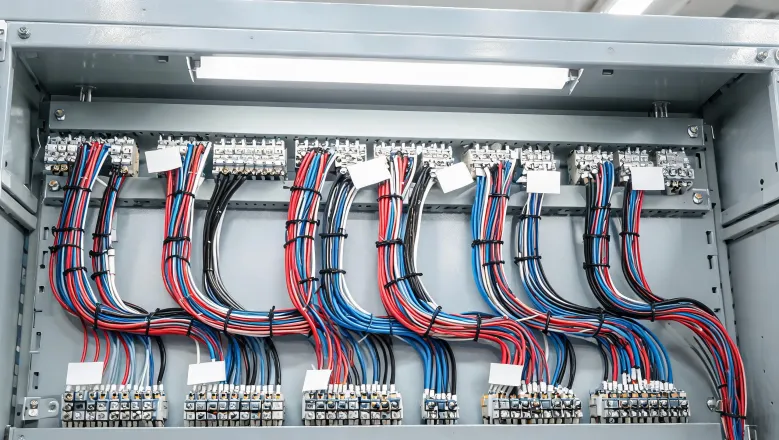
Why the Cheapest Electrical Cabinet Quote Always Costs You More
I coordinate emergency sourcing for electrical equipment — enclosures, junction boxes, cable management, the whole stack. Last quarter alone, my team processed 47 rush orders with a 95% on-time delivery rate. And the single biggest lesson from eighteen months of this work is counterintuitive: the lowest unit price almost always produces the highest total cost.
Not sometimes. Not "in certain cases." Almost. Always.
I know how that sounds. Every procurement guide tells you to shop around, get three quotes, negotiate hard. But after watching a $2,400 "savings" turn into an $11,000 problem on a single project, I stopped believing the conventional wisdom.
The Quote That Broke My Faith in Unit Pricing
In March 2024, a client needed 14 electrical cabinets delivered in 11 days. Tight turnaround, but doable. We had two quotes: our regular supplier at $5,200 all-in, and a new box distributor at $4,100.
Eighteen percent cheaper. I went with the $4,100 quote. Simple math, right?
By day nine, we discovered the cabinets weren't UL-listed for the application despite what the spec sheet implied (note to self: always verify certifications directly, not through the sales rep's email). The door hinges were misaligned on six units. And the mounting hardware — including the Panduit cable tie mounts we'd bundled — didn't match the hole pattern on the backpanels.
We paid our crew overtime to rework the panels. We paid rush shipping on replacement hinges. We paid express freight to get the units to the site on time. Total actual cost: $11,000 and change.
That's not a discount. That's a $5,800 penalty for trying to save $1,100.
What "Price" Actually Means
Here's how I now evaluate any electrical cabinet supplier or box distributor. It's not a spreadsheet — it's more like a mental checklist I run through while I'm triaging a rush order:
- Unit price — what's on the quote. Everyone looks at this. It's maybe 40% of the real number.
- Hidden charges — setup fees, revision costs, shipping markup, expedite surcharges. These popped up on three different rush orders last year alone.
- Time cost — if delivery is late and I have to expedite from another source, that delta goes straight to the total.
- Risk cost — what happens if the product fails inspection? If it doesn't fit? If I have to send a crew back to the site? That's the expensive one.
- Compliance cost — this is the one that sneaks up on you. The FTC's business guidance on advertising (ftc.gov) requires that claims about products be truthful and substantiated. But that doesn't stop suppliers from suggesting their enclosures meet certifications they haven't actually tested for. If your audit reveals a gap, you're the one on the hook.
Add those five items up and the spread between quotes compresses fast. Or reverses entirely.
The Panduit Cable Tie Problem
Small components follow the same logic, it's just harder to see upfront. A Panduit cable tie or mount costs pennies. So the temptation is to source from whoever has the lowest per-unit price and move on.
But the conventional wisdom is that small parts are low-risk. My experience with rush orders suggests the opposite. A failed cable tie mount doesn't fail gracefully — it fails mid-installation, when the panel is already 80% wired and your electrician is standing there billing $95 an hour.
I've seen it happen (this was back in 2023, during a push to standardize our vendor list). Cheap mounts that snapped at 4 pounds of tension instead of the rated 12. A batch of Panduit-style ties with inconsistent locking mechanisms. Each individual part was fine, technically. Just not fine enough.
When we switched to sourcing our Panduit cable ties and installation tools through the same electrical cabinet supplier that handled our enclosures, the per-unit price went up maybe 8%. But the failure rate dropped to effectively zero, and we stopped losing hours to rework.
That's the TCO calculation people miss. The 8% premium bought us reliability we couldn't get from a cheaper, disconnected supply chain.
But I Went Back and Forth on This
I'll be honest — the enclosure OEM vs. private label decision kept me second-guessing for weeks. On paper, private label sounded cheaper. Get a manufacturer to slap your brand on their standard box, skip the custom tooling costs.
But then I thought about liability. What happens when a private-label panel fails in the field? Who owns that? The manufacturer points to the brand owner. The brand owner points to the manufacturer. And your client is standing there with a downtime claim.
We went with OEM for our critical-path products. It cost more upfront. I questioned that choice for two months — right up until a competitor had a private-label failure and spent six figures in legal fees sorting out responsibility.
Maybe I got lucky. Or maybe the TCO framework actually works when you apply it honestly instead of just using it to justify the cheapest option.
What About the Counterargument?
I can hear the objection: "Not every cheap supplier is bad. Some are genuinely good and just undercut the market."
Fair. I've found two like that in eighteen months. They exist. But here's the problem — you can't tell the difference between "actually good and cheap" and "cheap for a reason" until after you've ordered. And if you're in a rush order situation, you don't have time for that experiment.
So my policy is simple: cheap gets a trial run on non-critical orders where I have a 30-day buffer. If they deliver flawlessly twice, they graduate to critical-path status. Until then, I'm paying the premium for the supplier who's never missed a deadline.
That's not loyalty. That's just math.
The Bottom Line
Unit price is a data point. Total cost is the decision.
Every time I've chased the lowest number — on cabinets, on cable tie mounts, on anything — I've ended up paying more in time, rework, or risk. The cheap quote isn't cheaper. It just hides the rest of the bill.
If you're sourcing electrical cabinets or cable management for a project with any kind of deadline pressure, do the full TCO calculation before you commit. Include the costs nobody puts on the quote. Then decide.
And if someone tells you the cheapest option is "just as good," ask them who covers the gap when it isn't. That question alone has saved me from at least four bad decisions.