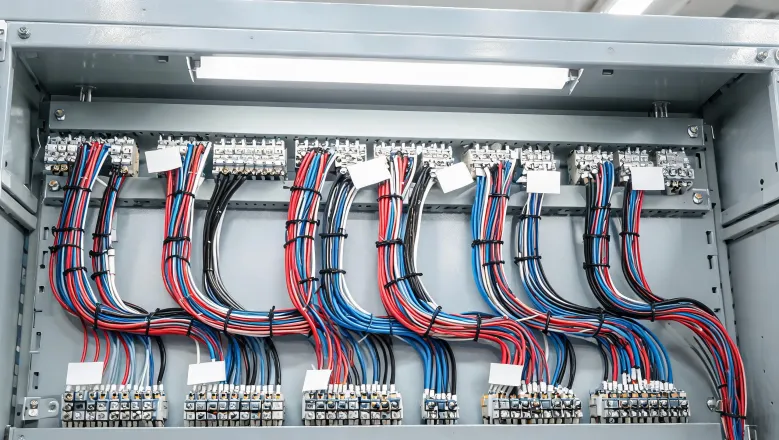
As a quality and compliance manager, I've spent the last four years reviewing electrical enclosures and cabinets before they ship. Roughly 200 unique items annually. In the first half of 2024, I rejected about 9% of first deliveries. Not because the metal was bent or the paint was chipped. Most of those rejections came down to something way less visible: cable management.
The part nobody likes to talk about.
Most buyers evaluate box suppliers on three things: price, lead time, and whether the enclosure physically looks right. The problem? An enclosure can pass all three and still be a nightmare when it's time to route cables, mount Panduit cable ties, and actually use the thing.
The Surface Problem: "It Looks Fine"
Here's what I see over and over. A customer orders 50 junction boxes. They arrive on time. The welds look clean. The door seals properly. Everyone's happy—until the electrician tries to bundle cables inside.
The mounting points for cable ties are in awkward spots. The panel layout doesn't account for wire routing. The backplate is solid sheet metal with pre-drilled holes that don't line up with anything.
And this is the moment everyone realizes: looking good and working well are not the same thing.
Why does this happen so consistently? Because the industry has taught buyers to evaluate the wrong things.
The Deeper Issue: Cable Management Is an Afterthought
I've come to believe—after about 150 orders and four years of watching this play out—that most enclosure manufacturers treat cable management as an afterthought. The box is engineered in CAD. The dimensions are checked. The standards are met. And then somebody asks, "Where do the cables go?" at the very end.
That's backwards.
The reason this matters so much is that cable management isn't cosmetic. It's structural. It affects heat dissipation, serviceability, and compliance. A cabinet with poorly planned cable routing runs hotter. It's harder to troubleshoot. And if you're in a regulated industry, it can be a code violation waiting to happen.
Let me give you a specific example. In Q1 2024, we received a batch of 120 cabinets where the cable tie mount holes were punched 8mm off from our spec. The vendor said it was "within industry standard." Normal tolerance on that pattern is ±1.5mm. We rejected the whole batch. They redid it at their cost—$18,000 in rerun expenses, plus two weeks of delay. Now every contract we write includes mount-hole location requirements. Looking back, I should have put that in our contracts from day one. At the time, I assumed "industry standard" meant something more specific than it actually does.
The Compliance Trap
Here's something I wish I had tracked more carefully over the years: how many customers assumed their enclosure supplier's products were "automatically compliant" with UL 508A or CSA C22.2 just because the enclosure itself was certified.
What I can say anecdotally is this: enclosure certification doesn't mean the cable management inside is compliant. The panel layout, wire bending space, and cable tie spacing all play into whether an installation passes inspection.
When I compared our Q1 and Q2 audit results side by side—same supplier, different specification detail levels—I finally understood why the details matter so much. The batch with explicit cable routing specs passed first-time inspection at 96%. The batch with vague "manufacturer best practice" language? 71%. That's a 25-point gap, just from spelling out what most buyers assume is "obvious."
The Panduit Cable Tie Question
Now, about the Panduit cable tie part of the conversation. Panduit is a brand I respect because they document everything. Their catalog tells you the tensile strength of every tie, the material ratings, the temperature range, the recommended installation tool. That makes my job easier.
But here's the thing that catches people off guard: not every Panduit cable tie mount is the same. There's a difference between a mount rated for outdoor UV exposure and one meant for a clean, dry control cabinet. There's a difference between standard adhesive mounts and screw-mount versions for high-vibration environments.
Does your enclosure supplier know the difference? Or do they just put "Panduit mounts" on the bill of materials and call it a day?
Don't get me wrong—I'm not claiming every supplier needs to be a cable tie expert. That's exactly the kind of overreach that gets buyers into trouble. A box manufacturer's core competence is the box. The metal. The dimensions. The environmental protection. But a good supplier knows when to say, "This application calls for a specific mounting solution, and that's outside our lane—here's what we recommend instead."
The supplier who says, "This isn't our strength, and here's who does it better" earned my trust for everything else. I'd rather work with a specialist who knows their limits than a generalist who overpromises.
What This Costs You
Let's put some numbers on it.
In 2024, I tracked rework costs across 14 projects where cable management issues were discovered after delivery. The average cost of rework per project: $4,200. That includes material, labor, and administrative overhead. The average delay: 11 days.
Multiply that by the number of projects you run per year, and it's not pocket change.
But the bigger cost is the one you can't invoice. When a cabinet arrives and the cable routing is wrong, you lose confidence in the supplier. You start double-checking everything. You add review steps. You write more detailed specs. All of that is your team's time being spent on something the supplier should have caught on their end.
Bottom line: the cheapest enclosure supplier is rarely the cheapest. Not when you factor in the hours your team spends correcting what should have been right the first time.
How to Evaluate Box Manufacturers Differently
I'm not going to give you a 20-point checklist. The problem with 20-point checklists is that nobody uses them three months later.
Instead, ask these four questions when you're evaluating a box manufacturer:
One: Have they routed cables in a cabinet like yours before?
Not "have they built enclosures." Have they thought about the cable routing inside one? Ask to see an example. If they can't show you one, that's a red flag.
Two: Do they understand the difference between a "Panduit cable tie" and the right Panduit cable tie?
This is my litmus test. If they can't talk about mount types, material ratings, or temperature ranges, they haven't thought much about cable management. That doesn't automatically eliminate them—but it means you'll need to spec cable management in detail yourself.
Three: What happens when something falls outside their standard process?
The best suppliers I've worked with tell me what they don't do before I ask. They say things like, "We don't do custom painting in-house, so we partner with a local shop." That kind of honesty is worth more than a supplier who says, "We can do everything" and then misses your deadline.
Four: Can they verify compliance with a paper trail?
Not just "we meet UL standards." Actual documentation. Test reports. Material certifications. If they can't produce it in 24 hours, that's a problem waiting to happen on your next audit.
The Short Version
The enclosure is the easiest part of the purchase to evaluate. The cable management is where hidden costs live. A box that looks perfect can still fail you when it matters—on the factory floor, during an inspection, or when a customer opens the door and sees a rat's nest of cables held in place by ties that were never rated for the environment.
I've been doing this for four years now, and I've learned that the best supplier relationships are built on boundaries, not promises. The vendors who tell you what they're good at and what they aren't—those are the ones worth keeping.
This was accurate as of January 2025. The market changes, standards evolve, and suppliers improve. But the principle stays the same: evaluate the box manufacturer on how they handle the parts you can't see. That's where the quality actually lives.