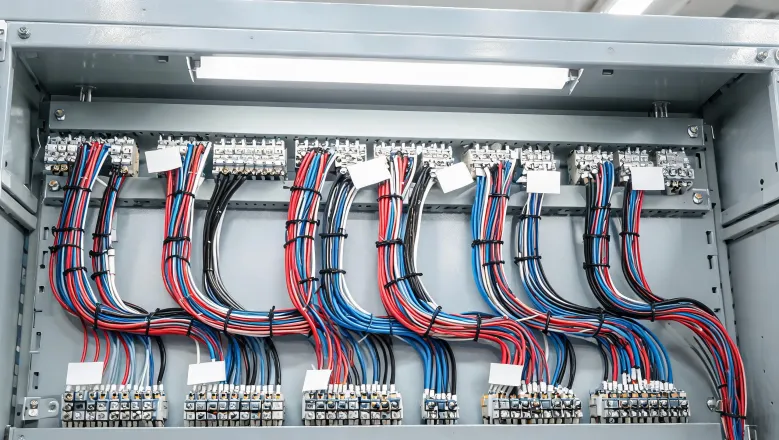
The short answer: the low bid is a deposit, not a price
The cheapest enclosure quote we've ever accepted cost us 12% more than the quote we initially rejected. That was a 600-unit run of 16×12×6 Type 1 junction boxes back in 2022 — the second vendor came in at $38 a box against the first vendor's $42, and I almost signed it.
Then I ran it through the TCO sheet. Their $38 became $22,800, plus $1,850 for setup on the knockout pattern, plus $2,400 for first-article approval and documentation, plus $1,100 in freight they'd 'forgotten' to include. Total: $28,150. The $42 vendor was $25,200 all-in. The 'cheaper' supplier was $2,950 more expensive, and we hadn't even produced a unit yet.
Here's the whole framework up front, because that's honestly all you need if you're short on time:
Score every enclosure supplier on six cost buckets instead of one price. Ask seven specific questions during the quoting stage — not after. And then do the opposite of all of that when you buy cable ties.
That last part isn't a joke. I'll get to it.
Why you should trust any of this
I'm a procurement manager at a 180-person electrical equipment distributor. I've owned our enclosure, component, and cable management budget — roughly $1.4M annually — for six years, negotiated with 40-plus vendors, and logged every order and every overrun in a cost tracking system I built myself after getting burned twice on hidden fees.
When I audited our 2023 spending against three years of POs, the number that came back was ugly: about 62% of our landed cost per enclosure was unit price. The rest was freight, expedite charges, incoming inspection time, first-article rework, and the administrative cost of chasing documentation. Nobody quotes you that 38%. You find it in March.
So the scorecard exists. It has cut our budget overruns by roughly 22% since we started using it (as of January 2025, at least — we're still refining it).
The six cost buckets that show up on the invoice
What I mean is that the 'cheapest' option isn't about the sticker price — it's about the total cost including your time spent managing problems, the risk of a bad first article, and the rework you'll pay for later whether or not anyone wrote it down.
Here's how I bucket it:
- Unit price. The easy one. Weight it at maybe 50-60% of the decision, not 95%.
- NRE and setup. Tooling, punch patterns, first-article charges, the fee to put your label and UL file number on it. Ask who owns the tooling in writing, especially if you're an OEM.
- Freight and packaging. LTL minimums, pallet height, whether the powder coat arrives scuffed because they stacked them face-to-face on a bare pallet. This is where 'free shipping' quotes quietly fall apart.
- Quality cost. Incoming inspection hours, rework, field failures. I don't have hard data on industry-wide first-article rejection rates, but based on our six years of orders, my sense is that somewhere between 8% and 12% of first deliveries from a new enclosure supplier have something wrong with them — wrong gasket material, a knockout off by 3mm, a missing nameplate.
- Inventory and lead time. What you spend on safety stock because their quoted 4 weeks is really 7. Ask for their last 12 months of on-time percentage, not their quoted lead time. Some can't produce it. That's an answer too.
- Administrative drag. How many emails does one PO change take? Who writes the RoHS and REACH declarations, and how long do they take to arrive?
The seven questions I ask every enclosure supplier now
This is the part that actually changed our results. Not the spreadsheet — the questions.
- Who physically builds it? There's a big difference between a fabricator, an integrator, and a broker with a website. If the answer is 'we have partners,' get the address of the facility that bends the steel.
- Who holds the listing, and what is it? If your box goes into a control panel assembly, UL 508A applies at the panel level. If you're selling an enclosure as a standalone, NEMA 250 enclosure types govern what it's rated for. Type 1 and Type 12 are not interchangeable no matter what the quote implies.
- What's the first-article process, and who pays for the second one?
- Can you send a sample with the documentation package? If it takes three weeks to get a spec sheet, imagine an ECN.
- What's your change-management process? One sentence or a paragraph? Paragraph wins.
- What happens when the powder coat spec is wrong? I want to hear about a specific time it happened and what they did.
- How long did it take you to answer this email? I know this sounds petty. It isn't. We tracked this across 9 vendors over 14 months, and response time to an engineering question during quoting was a better predictor of a supplier's performance than price, lead time, or company size. Consistently.
Here's the counterintuitive part: the vendors who asked us the most questions during quoting — annoying, borderline excessive questions — turned out to be our best long-term suppliers. The ones who said 'yes, we can do that' to everything said it because they weren't checking.
Verify current requirements at the source. NEMA 250 (Enclosures for Electrical Equipment, 1000 Volts Maximum) is published by NEMA at nema.org. UL 508A covers industrial control panels. NEC 110.3(B) requires listed equipment to be installed and used in accordance with its listing and labeling instructions — which is the reason a misapplied gasket or an unrated adhesive mount is a code problem and not just a quality problem. Standards get revised; check the edition you're actually designing to.
Cable ties: the one line item I stopped shopping on price
Look, I'm a cost controller. I'm predisposed to shop everything. But cable ties are where I stopped.
The reason isn't loyalty — it's that the specification is the product. A standard 7.4-inch, 50 lb minimum loop tensile nylon 6/6 tie is a commodity right up until it isn't. UL 62275 (harmonized with IEC 62275) is the standard for cable ties used in electrical installations, and the mark on the tie is what tells you who made it and what type it is. If the bag doesn't carry the manufacturer, the type designation, and a traceable file reference, you can't actually verify the tensile rating you just specified on a drawing. I've been handed ties that were colored to look like the real thing and failed at maybe half the load. There's no invoice line for that. There's a callback line for that.
I don't have hard data on how widespread mislabeled cable ties are in the distribution chain, and I'm not going to pretend I do. What I can say anecdotally is that in six years, every single tie-related quality issue we've had came from a non-authorized channel, and zero came from authorized Panduit distribution.
Panduit cable tie mounts deserve their own note, because that's where I see the most expensive assumption made. Adhesive-backed mounts — the 1-inch square ones, typically an ABM2S-A or similar — are rated on a clean, flat, room-temperature, properly cured application. Our panel shop was applying them to a dusty steel surface in a 55°F bay and wondering why they popped off in the field. The mount isn't the problem. The process is. Wipe with isopropyl alcohol, press hard, let it cure per the installation instructions before you load it, and keep screw-mount versions for anything with heat cycling or vibration.
On our side, getting this right meant buying the ties and the enclosures from a single wholesale/OEM supplier instead of three — one PO, one documentation package, one freight lane. There's something satisfying about opening a shipment and not having to inspect it twice. After the years of chasing spec sheets across four vendors, that's the payoff.
I'm not going to quote you a per-tie price, because it moves with nylon resin and channel, and it would be stale by the time you read this. Verify current pricing with your distributor.
Where this approach breaks down
I'd be doing you a disservice if I sold this as universal, because it isn't.
If you buy under about 200 enclosures a year, this is probably overkill. You'll spend more in tracking hours than you'll recover. Find one supplier you trust, pay a little more, and move on with your life.
If your enclosures are genuinely one-off custom jobs, the TCO model inverts. When every unit is different, lead time and first-article accuracy beat unit price by a wide margin, and a formal six-bucket scorecard just slows down a decision you need to make this week.
And if you're in breakdown service — where the customer is paying for speed, not cost — price shopping is the wrong instinct entirely. I've watched a distributor lose a $60k account over $90 in expedite freight.
One more honest note. In 2023 I pushed hard to consolidate our enclosure sourcing down to a single supplier and got burned when they hit a resin and freight crunch in Q3. We were exposed for six weeks. Single-sourcing saved us real money on paper and cost us more than it saved. The scorecard now includes a concentration risk column, and if you're building one, yours should too.
The framework works for most mid-volume B2B buyers. Just know which bucket you're actually in before you build the spreadsheet.