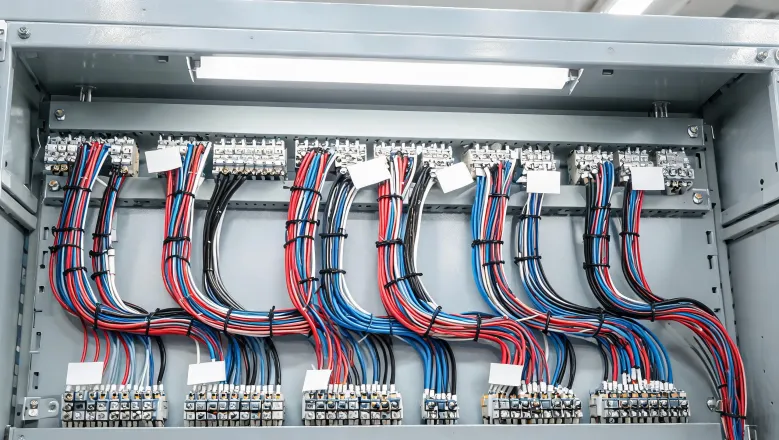
It was 4:42 PM on a Thursday in March 2024. A client called—their electrical contractor had miscalculated enclosure quantities on a hospital project. They needed 85 junction boxes, matching Panduit cable tie mounts, and about 3,000 Panduit cable ties by Monday morning. Not Tuesday. Monday, 7 AM.
I coordinate rush orders for a living. In my role handling emergency sourcing at an industrial supply company, I've managed somewhere around 300 rush jobs over six years. Maybe 250—I'd have to check the system. Some were $500. Some were $15,000. This one was in the middle, but the stakes weren't. Missing that Monday delivery would have triggered a $12,000 penalty clause in their contract.
Here's what almost every buyer assumes when they call me: the problem is time. If they'd ordered earlier, everything would have been fine. They're watching the clock.
They're watching the wrong thing.
The Surface Problem: It Looks Like a Timing Issue
From the outside, an emergency enclosure order looks simple. You need X units, you call a supplier, you pay for expedited shipping, you get your stuff. The lead time shrinks from ten days to three. Problem solved.
But that's not what actually happens. What actually happens is that the rush order strips away every safety net you normally don't think about. And when those nets disappear, you find out—fast—whether your supplier was ever really capable of doing what they promised.
I've watched this play out more times than I can count. The buyer thinks they have a logistics problem. What they actually have is a supplier validation problem that was there all along. The deadline just made it visible.
The Deeper Issue: You're Asking the Wrong Questions
Most buyers, when they're sourcing enclosures or cable management products, focus on price per unit and stated lead time. Those feel like the important numbers. And for standard orders, they might be—or at least, they're not catastrophic.
But here's what the rush order exposes: you never verified whether your supplier could handle anything outside the ordinary.
I call this the "catalog illusion." An enclosure catalog—whether it's a PDF, a website, or a printed binder—shows you what a supplier carries. It tells you almost nothing about what they can execute. I've seen beautiful catalogs from suppliers who couldn't produce a compliance certificate on demand. I've seen thin catalogs from suppliers who could pull off a 48-hour turnaround on custom-modified enclosures without blinking.
When I'm triaging a rush order, I don't start by asking "how fast can you ship?" I start by asking three things that most buyers never think to ask until it's too late:
- Can you show me current certification documentation for the specific SKUs I need? Not "we're UL listed" as a blanket statement. The actual file number, the actual rating, for the actual product.
- What's your process for private label or OEM orders, and what's the realistic timeline? If you're buying enclosure private label products, the gap between "we can do that" and "we can do that in time" is where projects die.
- What happens when something goes wrong? Because in a rush order, something always does. A supplier's true capability shows up in how they handle the unexpected, not the routine.
People assume the lowest quote means the vendor is more efficient. What they don't see is which costs are being hidden or deferred—usually compliance testing, proper packaging, or actual stock availability versus "available on order."
That last one is the silent killer. "In stock" means different things to different suppliers. For some, it means physically on the shelf. For others, it means their own supplier has it and they hope they can get it in time. On a standard order, you might never notice the difference. On a rush order, the difference is everything.
What This Actually Costs You
Let me give you a real number. Not a hypothetical.
In 2023, we lost a $47,000 contract because a client tried to save about $800 by going with a cheaper enclosure supplier for a data center retrofit. The supplier promised NEMA 12 rated enclosures at a price that was, honestly, too good. The client didn't verify the certification. The enclosures arrived—late, but they arrived. Then the inspector found the UL label didn't match the actual enclosure construction. They weren't NEMA 12. They weren't even close.
The client had to pull every unit, reorder from a verified source, and pay overtime for electricians who were standing around waiting. Total cost: somewhere north of $30,000 in delays, rework, and expedited replacement. The $800 "savings" bought them a $30,000 problem.
That's the obvious version. Here's the one that stings more: the invisible cost of not having a real relationship with a supplier who can move fast when you need them.
When I was starting out on the buying side years ago, I treated suppliers as interchangeable. Lowest price wins, next. The vendors who treated my $200 orders seriously—who answered questions, who sent documentation without me having to chase them, who actually picked up the phone—are the same ones I now call for $20,000 orders. And they pick up.
The suppliers who brushed me off when I was small? I never found out if they could handle the big stuff. But I have my suspicions.
Small doesn't mean unimportant. It means potential. But that's a different conversation.
What matters right now is this: if you're sourcing enclosures or Panduit cable tie products and you've never pressure-tested your supplier's actual capability, you're carrying risk you don't know about. The rush order just makes it impossible to ignore.
What Actually Works: Five Things to Verify Before You Need Them
Here's the short version. It's short because the problem is the complex part—the solution is mostly discipline.
- Get the documentation up front. Ask for UL file numbers, NEMA ratings, and material certifications for the specific products you buy. Verify them. If a supplier hesitates or sends a generic certificate that doesn't match the SKU, that's your red flag.
- Test the private label process with a small order first. If you're considering enclosure private label, do a trial run with a modest quantity. You'll learn more about their process in one small batch than in a dozen sales calls.
- Ask about their worst week. Not their best. "Tell me about a time something went wrong on an order. What happened?" The answer tells you whether they have real operational depth or just good sales materials.
- Verify stock claims. For critical items, ask for a real-time stock check, not a catalog listing. The difference between "in stock" and "available" can be two weeks.
- Build the relationship before the emergency. Order something small. Pay on time. Ask a question that isn't about price. Suppliers who know you as a real customer move faster for you than suppliers who see you as a purchase order number.
None of this is complicated. It's just slower than we'd like. Which is exactly why people skip it—until a Thursday afternoon call forces the issue.
Enclosure pricing and lead times vary significantly by spec, quantity, and supplier. Based on publicly listed distributor rates as of January 2025, standard NEMA 1 enclosures in the 12×12 size range typically list between $15–45 per unit, while NEMA 4/4X rated equivalents run $60–200+, depending on material and configuration. Private label and OEM pricing varies. Verify current rates and certifications directly with your supplier.
Bottom line: your emergency wasn't caused by the deadline. It was caused by everything you didn't verify before the deadline existed. The good news is that fixing it doesn't require heroics. It just requires asking better questions—ideally before 4:42 PM on a Thursday.