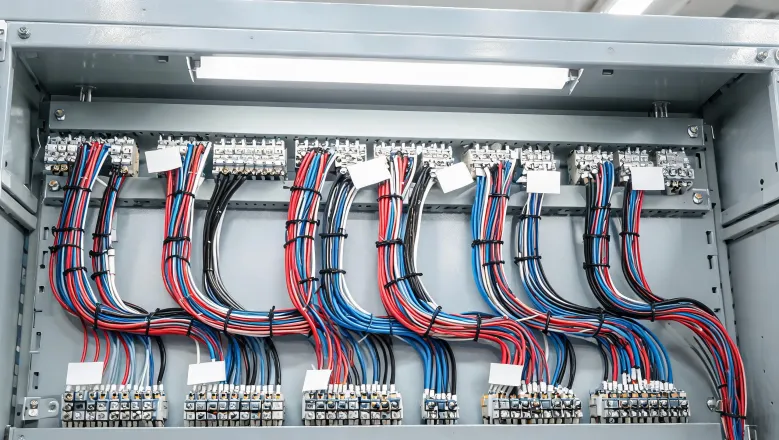
September 2022. 50 enclosures, 10 boxes of Panduit cable ties, and 300 Panduit cable tie mounts showed up at our shop on schedule. Everything looked right.
Two days later, I was scraping adhesive-backed mounts off the inside of those enclosures and keeping my language professional.
This was not a bad product story. It was a hand-off problem, and it changed how I answer the question of what to look for in a box supplier.
First, the credentials nobody asked for. I have been buying electrical enclosures, junction boxes, electrical cabinets, and cable management for B2B and OEM projects for about eight years. I made the classic beginner mistake early on: approving specs without a checklist. Eleven of my documented mistakes cost roughly $23,000 in rework and delays. That number would be higher if I had not started documenting them.
The surface problem: a cable tie mount on the wrong finish
We were building 50 cabinets for an OEM production run. The boxes were ordered from an enclosure manufacturer we had worked with for years. The cable ties came from a trusted Panduit distributor. In theory, this should have been an easy buy.
The mistake started with the Panduit cable tie mounts. I chose the adhesive-backed style. Adhesive-backed means no drilling, no exposed hardware, no extra design work. To my brain, that made it the simple option.
But adhesive-backed Panduit cable tie mounts need a smooth, clean, oil-free surface to develop full bond strength. The interior panels on our enclosures had a textured powder-coat finish. That texture drastically reduces the contact area. It looked fine for a few hours. Then the edge of the first mount lifted, and once an edge lifts, the mount is on borrowed time.
We caught it during a trial fit when a small cable bundle pulled free. Good timing, relatively speaking. If that had happened in the field, it would have been a service call, not just a quiet afternoon in our own shop.
The fix for this batch cost about $1,300 in replacement mounts and labor, plus a two-day delay. I still kick myself, because the datasheet said what I needed to know. I just did not read it until after the scraper came out.
The real problem: nobody owned the interface
It is tempting to call this a simple spec error. That is the surface answer. The deeper reason is that the enclosure OEM and the cable tie supplier each had a complete view of their own product and no view of the space between them.
An enclosure OEM cares about dimensions, materials, finishes, and enclosure ratings. A cable tie supplier cares about the tie material, tensile strength, temperature range, and mounting method. Neither one is responsible for the moment where an adhesive-backed Panduit cable tie mount meets a textured powder-coat panel. That responsibility was mine. And I dropped it.
Here is what I tell our junior buyers now: if you search for Panduit cable tie in a distributor catalog, you get a long list of options. There are different materials, widths, lengths, temperature ratings, UV ratings, and flammability ratings. The same is true for Panduit cable tie mounts. Choosing them is not the hard part. The hard part is making sure the box they attach to is designed for the way they attach.
I checked Panduit's published selection data again in January 2025, partly to rebuild my own sanity check. The information on mounting systems and cable tie families is there. In 2022, I had the information available too. I just bought by category name and skipped the interface work.
The bill was bigger than the part
The $1,300 rework was the direct cost. The larger cost was credibility. The assembler who found the loose mount had actually warned me about adhesive mounts on textured panels before the order shipped. I had heard him, but I did not change the plan because I assumed it would be fine. Being wrong is expensive. Being wrong after someone else flagged the risk is embarrassing in a way that does not show up on a profit-and-loss statement.
That is the real reason I now spend so much time on what to look for in a box supplier. A cheap enclosure and a good cable tie are not a system. A system is a cabinet where the mounting surface, the cable support, the bend radius, and the access path are all planned before the purchase order goes out.
If you think that sounds obvious, you are right. It was not obvious enough to me in September 2022.
What to look for in a box supplier now
I used to define a good box supplier by price and lead time. Those still matter, but they are not the first thing I ask about anymore. Now I want to know how the supplier handles the parts of the project that connect one component to another.
- They ask about cable management early. If I mention Panduit cable tie mounts in an RFQ, they ask what those mounts will attach to and how they will be installed. If cable management inside an enclosure is a surprise to them, they are quoting steel, not solutions.
- They put mounting details on the drawing. I do not want a general note that says cable ties are required. I want a drawing that shows the cable tie mount locations, the mounting surface, and the hole pattern if holes are needed.
- They can think like an enclosure OEM, not just a standard box supplier. Someone who only makes standard boxes can ship you a perfectly good empty enclosure. That is not enough for OEM work. An enclosure OEM can add custom panels, gland plates, threaded holes, silkscreening, and other changes that make the box repeatable from batch to batch.
- They know their certification limits. A good supplier does not claim every enclosure is certified for every environment. They tell you what rating the standard product carries and what needs to be verified for your application. Vagueness on that point is a red flag.
- They support checklists. We attach a short interface checklist to every related purchase order. It asks for the Panduit cable tie part number, the mount style, the mounting surface, and the drawing note. A supplier who pushes back on that kind of clarity is telling me something important.
Then I made the process a little more efficient without buying software. I changed our RFQ template from a free-text box to a structured set of required fields. That simple shift cut our average quote cycle from about two and a half rounds to roughly one. More importantly, it forced the conversation to happen before the order, not after the scraper.
Since we added that checklist, it has caught 37 mismatches over the last 18 months. One of them would have shipped 120 enclosures with no provision for the screw-mount Panduit cable tie bases we specified. So glad we added the step. It felt like bureaucracy on day one. It has saved us multiple headaches since.
Here is the bottom line: a Panduit cable tie is not just a piece of plastic, and a Panduit cable tie mount is not a sticker. Both need an enclosure that is designed to receive them. If you are buying enclosures with cable management, find a box supplier that understands that interface and asks about it before you send the PO. That is the real answer to what to look for in a box supplier in one line.