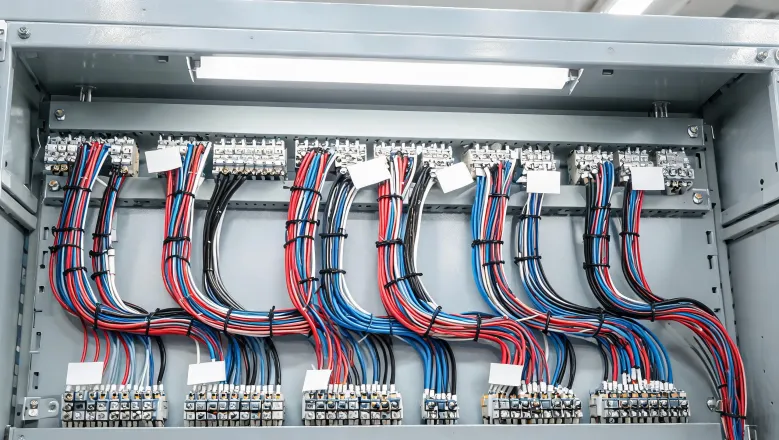
Stop Treating Enclosures Like They're Just Metal Boxes
I believe most buyers source electrical enclosures backward. They spend time comparing IP ratings and steel gauge, then almost no time on the details that define perceived quality—hinge alignment, finish consistency, packaging, cable tie mounts. That's backward. In a B2B box distributor buying guide, the small stuff is the big story.
I'm a quality/compliance manager at a wholesale electrical enclosure and cable management company. I review every order before it reaches customers—roughly 600 line items a week. In Q1 2024, I rejected 2.7% of first deliveries. The reason wasn't a single major failure. It was a pattern of small inconsistencies: a hinge welded 2mm off, a label that looked slightly recycled, a cable tie mount hole that didn't line up with the dimension on the drawing.
Customers rarely use those words in a complaint. But they notice. And what they notice determines whether your enclosure distributor program survives.
Same Spec, Different Perceived Quality
Here's the moment that changed how I inspect: when I compared two 12x10x6 NEMA 12 enclosures side by side, I finally understood why details matter. Both came from certified factories. Both passed our standard checks. One door closed with a soft, even click. The other needed a push and then bounced back a little. Both are "NEMA 12." One felt like an engineered product. The other felt like a metal box.
Specs are the floor, not the ceiling. If you're an electrical enclosure distributor, you're not selling steel. You're selling confidence. A panel builder opens your enclosure, sees a crooked ground stud, a paint chip, or a gasket that's starting to peel, and every "certified" claim on the data sheet loses weight. The same is true for small accessories.
Consider Panduit cable tie mounts. A mount with an off-center hole will still hold a cable tie. On a single mount, no one notices. On a row of twelve, the pattern is obvious. Because Panduit cable tie mounts are designed to fit standard Panduit cable tie widths, substituting an uncertified "equivalent" to save four cents can change the way a wire harness sits. It may not be a safety problem. But it's a workmanship problem your customer will see every time they open the panel.
Reference: UL 62275 covers cable ties and mounting accessories for electrical installations. It defines mechanical strength, flammability, and temperature requirements. It does not measure visual alignment. That's on you.
Private Label Means You Own the Details
I only believed in checking packaging details after I ignored them once. We were doing a box private label order: 300 painted enclosures with the customer's logo on the front, standard RAL 7035 gray, all with pre-installed Panduit cable tie mounts. The enclosures were fine. The labels were not—one roll had a smudge in the logo, and the packer didn't catch it until 40 boxes had gone through. The customer accepted the shipment, but their note said the next order needed "better presentation." That phrase hurt more than a technical rejection would have.
Here's something vendors won't tell you: private label programs are rarely rejected for the overall rating. They're rejected for perception. The hinge wobbles. The door gasket sits proud. The cable tie mounts are the wrong style. Something that seems small becomes the reason your customer inspects every future unit more carefully.
So when I put together our internal box distributor buying guide, I don't start with price. I start with consistency. I've been running this verification protocol since 2022 (as of January 2025, it's still the first thing I check). We ask enclosure suppliers for batch-to-batch samples, with written tolerances for door alignment, weld seam acceptance, and finish thickness. We check labels, cartons, and lot codes. Those little things turn into "brand character" after your customer puts their name on the product.
Dodged a bullet last year when I checked the hole spacing before approving a pallet of cable tie mounts. We were one click away from 5,000 pieces with a 0.2mm offset. Each one would have worked. Together, they would have looked sloppy. That's the kind of detail that kills a private label relationship.
What Should a Box Distributor Buying Guide Cover?
If you're building an electrical enclosure distribution line or a private label box program, put a simple quality hierarchy in your procurement spec: materials, finish, hardware, packaging. In that order. Then start checking.
- Mounting patterns. If the drawing calls for Panduit cable tie mounts, specify the exact part number and hole spacing. Don't allow "similar" substitutions without engineering approval.
- Finish consistency. Ask for gloss and paint thickness tolerances. For brand-critical colors, keep Delta E below 2, a common benchmark in Pantone Color Matching System guidelines. It applies to enclosures the same way it applies to printed products.
- Packaging and labeling. Scuffed enclosures and smudged labels arrive looking old. In distribution, the carton is part of the first impression.
- Documentation. Every enclosure and cable tie mount should have a traceable lot code. A quality issue is bad; not being able to isolate it is worse.
Why does this matter for your bottom line? Because B2B procurement decisions are rarely made on the spec sheet alone. Buyers compare two quotes, see a small price difference, and choose the supplier that seems more reliable. The tactile details—cable ties, mounts, the enclosure door—form that impression. (Note to self: this is also why we include unboxing photos in every supplier audit.)
Never expected the lowest-priced enclosure supplier to become our most consistent vendor. Turns out they weren't cutting corners. They had an older, well-understood painting line and a smaller product range. The surprise wasn't the price. It was how much perceived quality improved when we switched the private label line to that supplier.
"But My Customer Only Cares About Price"
I hear this from buyers every year: "The end customer just wants a functional enclosure. We don't need the nice stuff." Fair enough. Functional is the baseline. But in a competitive tender, when two vendors quote within 3% of each other, the decision shifts from price to emotion. The enclosure that looks right wins. A row of Panduit cable tie mounts with consistent spacing is a tiny advertisement for your manufacturing discipline.
This doesn't mean overspend. It means spend where it's visible. A quality manager's job is not to demand expensive materials. It's to protect the brand from the thousand tiny compromises that customers see but never name.
So my opinion stays the same: in electrical enclosures and cable management, quality isn't a luxury. It's the interface between your customer and your company. Specs tell them you can deliver. Perceived quality tells them you take them seriously. You need both.
If you're setting up a box distributor buying guide, put perceived quality at the top. The Panduit cable tie mounts will follow.